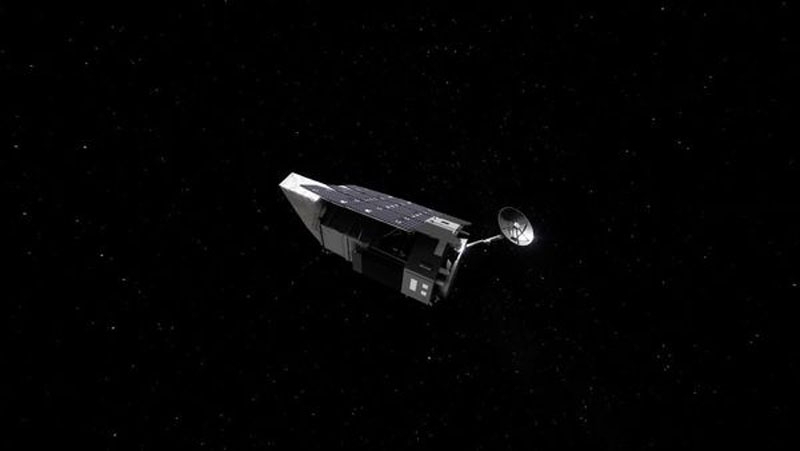
The Nancy Grace Roman Space Telescope has completed its primary onboard system checks and is currently in the commissioning phase. Engineers are finalizing equipment settings and verifying the quality of observations to ensure the telescope meets its operational requirements.
During testing, the spacecraft demonstrated its ability to point accurately at specific sky regions, maintain stability, and transmit data to Earth. The guidance system successfully operated in challenging environments, including dense star clusters and regions obscured by thick dust clouds, dispelling earlier concerns about potential orientation errors.
The telescope features the Wide Field Instrument (WFI), which combines high resolution with a wide field of view. It is designed to detect objects with light 100 million times fainter than the human eye can perceive, allowing for the creation of vast panoramas containing millions of stars and galaxies.
Specialists are currently calibrating instrument sensitivity and measuring observatory characteristics to distinguish between actual celestial brightness changes and potential system noise. Some systems are already exceeding initial performance specifications, which may enhance the telescope's future scientific output.
Once commissioning is complete, the observatory will begin its primary research program. The mission objectives include studying dark energy and dark matter, conducting large-scale galaxy surveys, and searching for exoplanets.