

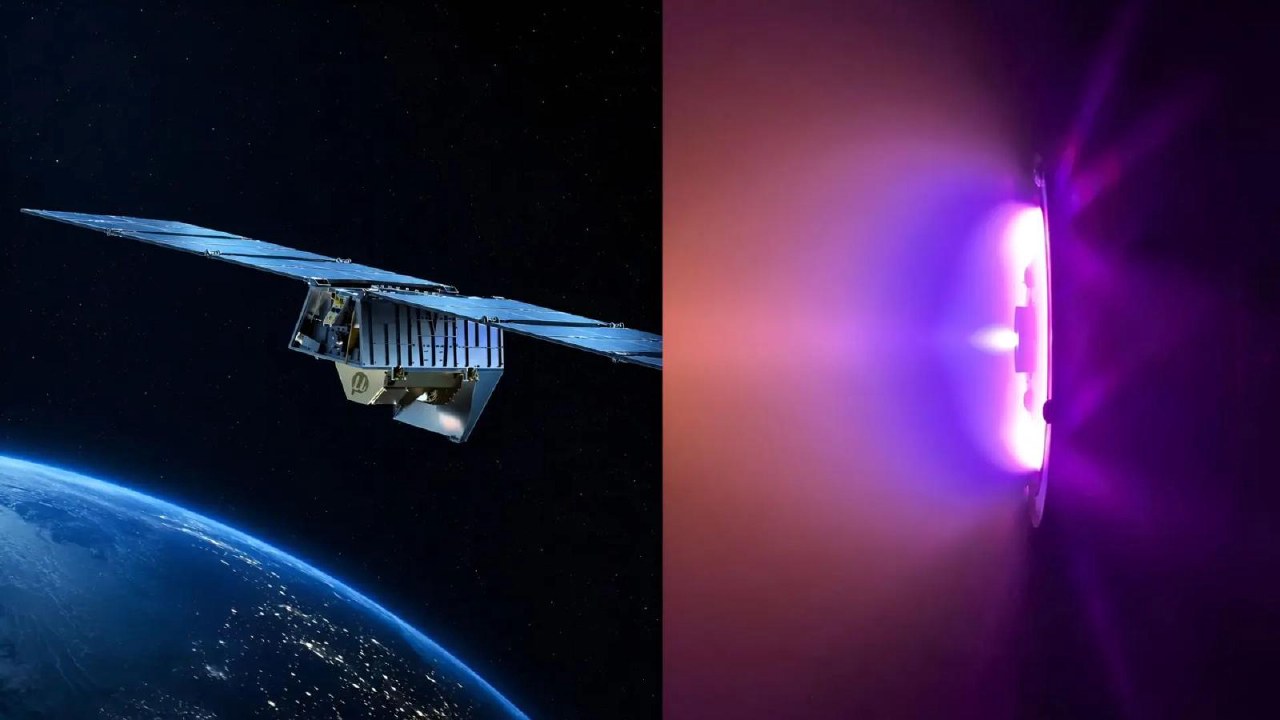
Muon Space successfully tested the Starlight Hall thruster using solid zinc as a propellant on the SERT-III satellite. The test took place on July 1, confirming that the engine generated the calculated thrust and altered the satellite's trajectory as expected.
Unlike traditional Hall thrusters that rely on xenon or krypton stored under high pressure, the Starlight system utilizes solid zinc. This design eliminates the need for heavy high-pressure tanks, potentially reducing the overall mass and complexity of satellite hardware.
The use of zinc offers cost and availability benefits, which are critical for large-scale satellite constellations. During the mission, sensors recorded lower levels of zinc deposition on the spacecraft surfaces than initial conservative estimates had predicted.
Muon Space intends to deploy the current version of the engine for orbit raising, station keeping, and deorbiting tasks. The company plans to begin commercial installations on client satellites by the end of 2026 while refining production and reliability.
Development is also underway for a more powerful iteration of the Starlight engine designed for large spacecraft. Orbital testing for this advanced version is scheduled for the first quarter of 2027 to further validate the use of solid metals in space propulsion.



