

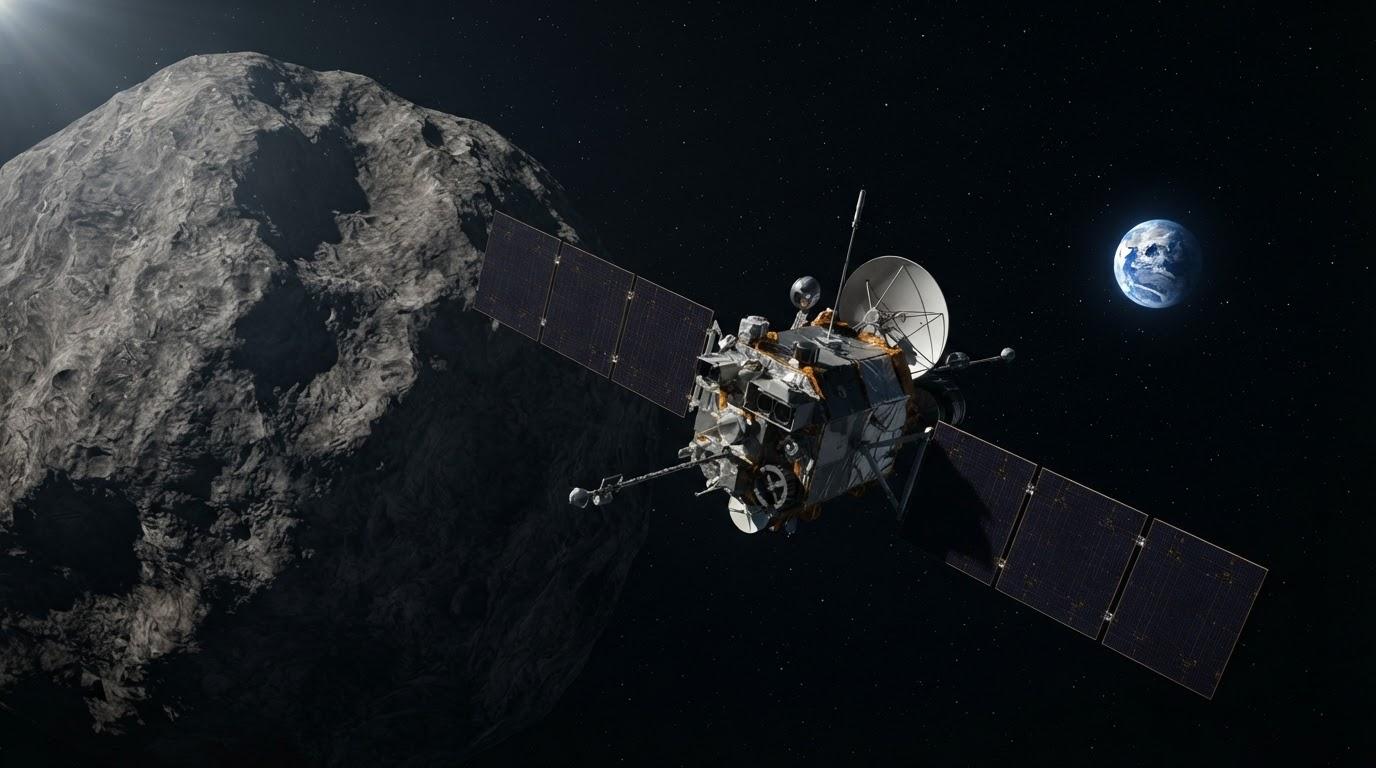
Researchers at Moscow State University are developing a small interplanetary probe to study the asteroid Apophis. The asteroid is set to pass within 32,000 kilometers of Earth on April 13, 2029, which is closer than the altitude of geostationary satellites at 35,800 kilometers.
According to Vladislav Osedlo from the Skobeltsyn Institute of Nuclear Physics at MSU, the proposed spacecraft will feature enhanced autonomy, increased power capacity, and a more powerful propulsion system compared to standard CubeSat models. The project aims to adapt existing technologies for long-term autonomous operation in deep space.
Apophis, discovered in 2004, measures approximately 350 meters in diameter. While scientists have ruled out the risk of a collision with Earth for the coming decades, the upcoming close approach provides a rare opportunity to study the asteroid's properties and improve planetary defense methods.
The Russian project is currently in the technical design phase. Specific launch dates, the final configuration of the spacecraft, and the scientific payload have not yet been determined. Meanwhile, international efforts are also underway, including NASA's OSIRIS-APEX mission and the European Space Agency's RAMSES project.



