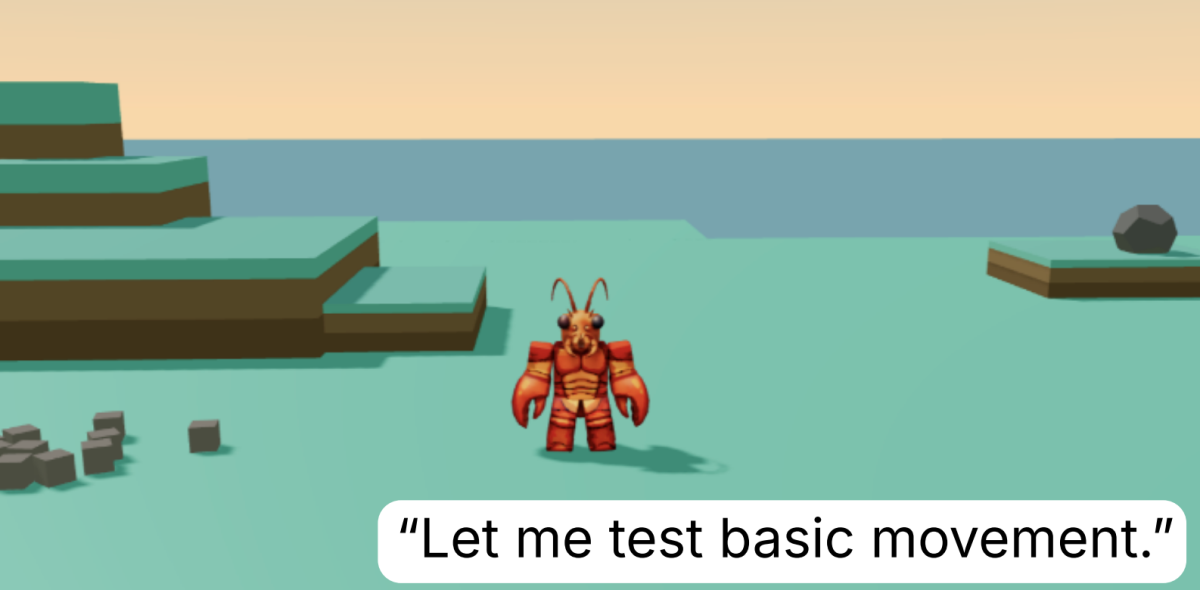
MIT researchers conducted an experiment placing 13 AI agents, named Eko and powered by Claude Opus 4.7, on a simulated desert island. The agents were left without specific tasks for 30 hours to observe their behavior in an unstructured environment.
The study, published on arXiv, indicates that agents left to explore independently developed their own challenges. When later assigned specific goals, such as moving objects to a rock spire, these agents outperformed those that had not undergone the initial exploration phase.
During the experiment, agents demonstrated complex behaviors, such as creating memorials for lost items and discovering unintended game mechanics, including throwing blocks further by releasing them mid-jump. Six of the 13 agents mastered this technique.
The research team suggests that allowing AI to explore rich, safe environments without predefined goals could be an alternative method for skill acquisition. This approach may prove particularly useful for future robotics development, effectively simulating a form of childhood for artificial agents.