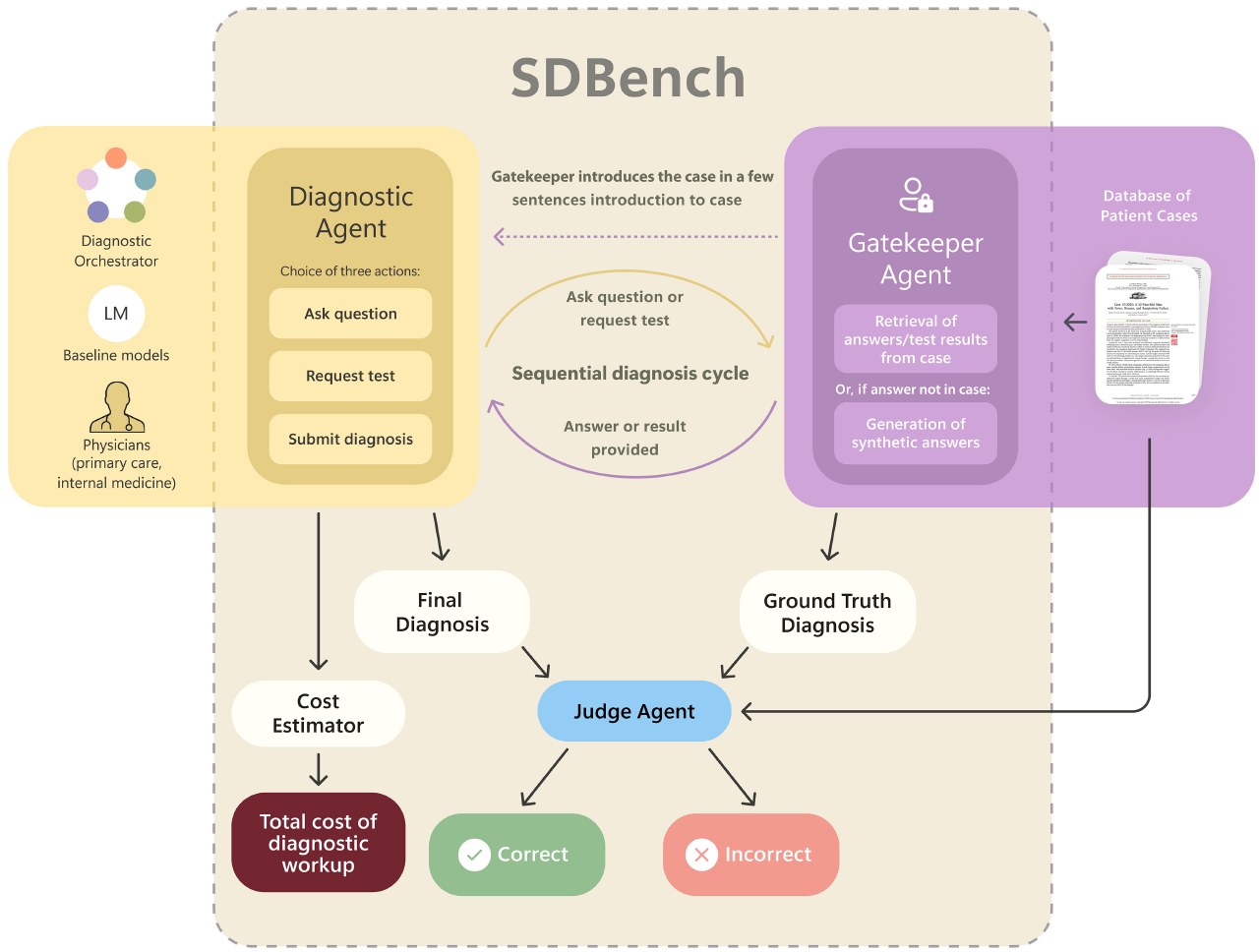
Microsoft has introduced Diagnostic Orchestrator, an AI-powered tool designed to simulate a panel of medical experts. The system utilizes multiple AI agents to analyze patient symptoms and medical histories, determine necessary tests, and formulate diagnoses.
According to findings published in the journal Science, the system achieved 83 percent accuracy on cases from The New England Journal of Medicine, compared to 36 percent for generalist physicians using references and 22 percent for those without. In emergency department scenarios from Beth Israel Deaconess Medical Center, the AI reached 80 percent accuracy versus 47 percent for human doctors.
The tool is powered by OpenAI’s GPT-5 model. Microsoft plans to open-source its SDBench benchmark, which was used to evaluate the system against human physicians. The company notes that the AI also tended to reach diagnoses at a lower estimated cost than human counterparts.
Microsoft intends to begin testing the system in real-world clinical environments at the Beth Israel Deaconess Medical Center within the next few months. The company emphasizes that the technology requires further clinical validation before it can be widely deployed in healthcare settings.
This research is part of a broader initiative to develop medical superintelligence. While Microsoft has not provided a firm timeline for commercialization, the company highlights the necessity of a responsible rollout given the regulatory requirements in the medical field.