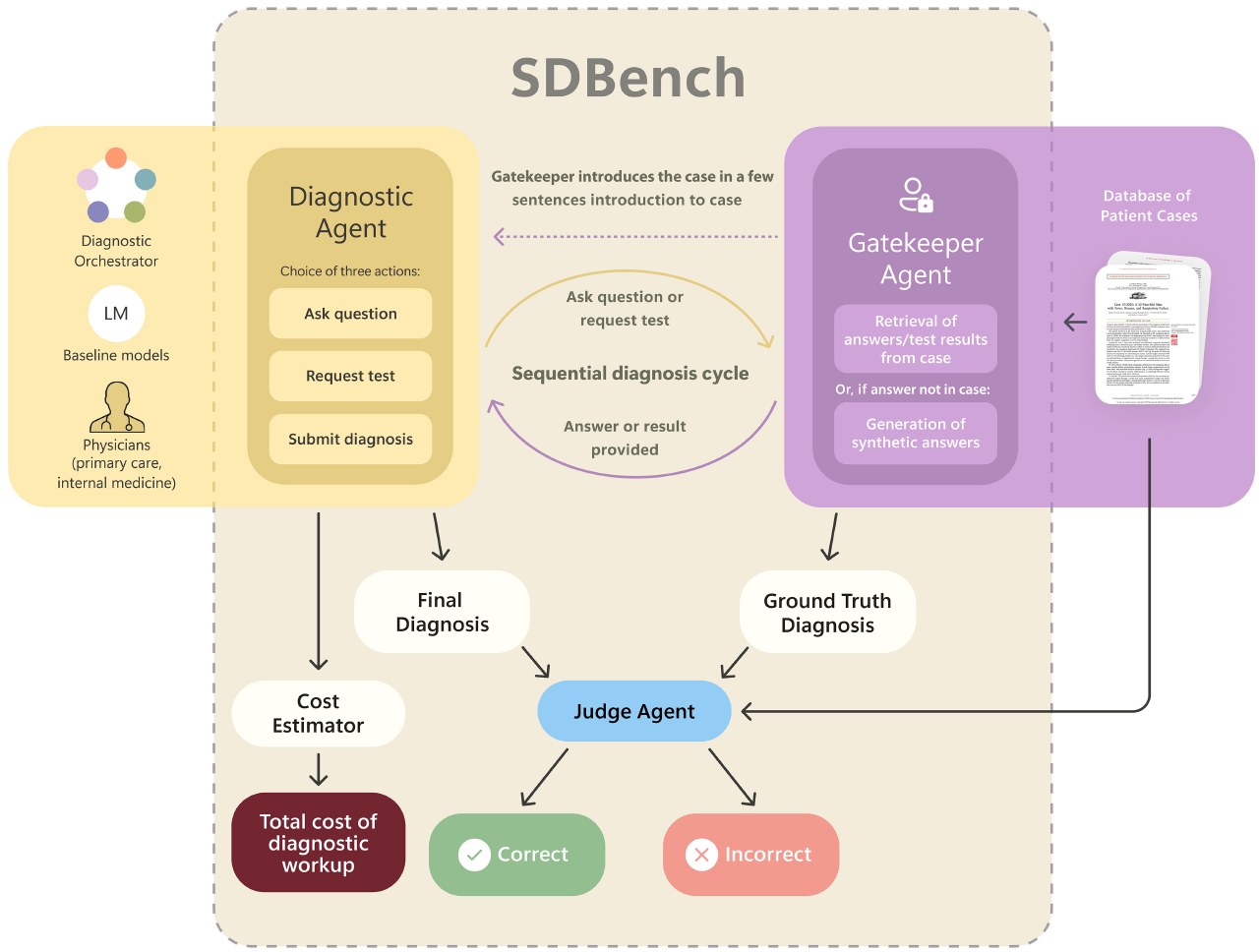
Microsoft has unveiled Diagnostic Orchestrator, an AI system designed to analyze patient medical histories and symptoms. The tool utilizes the GPT-5 model from OpenAI alongside a network of specialized AI agents. These agents simulate clinical reasoning by evaluating symptoms, determining necessary tests, and proposing diagnoses, often at a lower estimated cost than human practitioners.
During tests based on cases from The New England Journal of Medicine, the system achieved 83% accuracy, while general practitioners reached 36% with reference materials and 22% without. In a separate evaluation using data from a Boston hospital emergency department, the AI reached 80% accuracy compared to the 47% average recorded by physicians. These findings were published in the journal Science.
To facilitate further research, Microsoft has developed and intends to release a testing suite called SDBench. Despite these results, the company notes that the system has not yet been tested in real-time clinical settings. Mustafa Suleyman, head of Microsoft AI, emphasized the need for further clinical validation to address challenges like incomplete patient data and atypical symptoms.
The company plans to initiate clinical trials at the Beth Israel Deaconess Medical Center in the coming months. While Microsoft envisions this technology as a component of a broader medical superintelligence program aimed at assisting with treatment selection and care coordination, a commercial launch remains pending. The system must first meet rigorous safety, efficacy, and regulatory standards.