Microsoft has introduced Diagnostic Orchestrator, an AI system designed for medical diagnosis that utilizes multiple AI agents to simulate a clinical consultation team. The system, which operates on the GPT-5 model, focuses on coordinating diagnostic workflows and verifying reasoning results rather than relying solely on a single base model.
In tests based on hundreds of case reports from the New England Journal of Medicine, the system achieved an 83% diagnostic accuracy rate. In comparison, general practitioners achieved 36% with reference materials and 22% without. In a separate test using emergency department data from Beth Israel Deaconess Medical Center, the AI reached 80% accuracy, while human doctors averaged 47%.
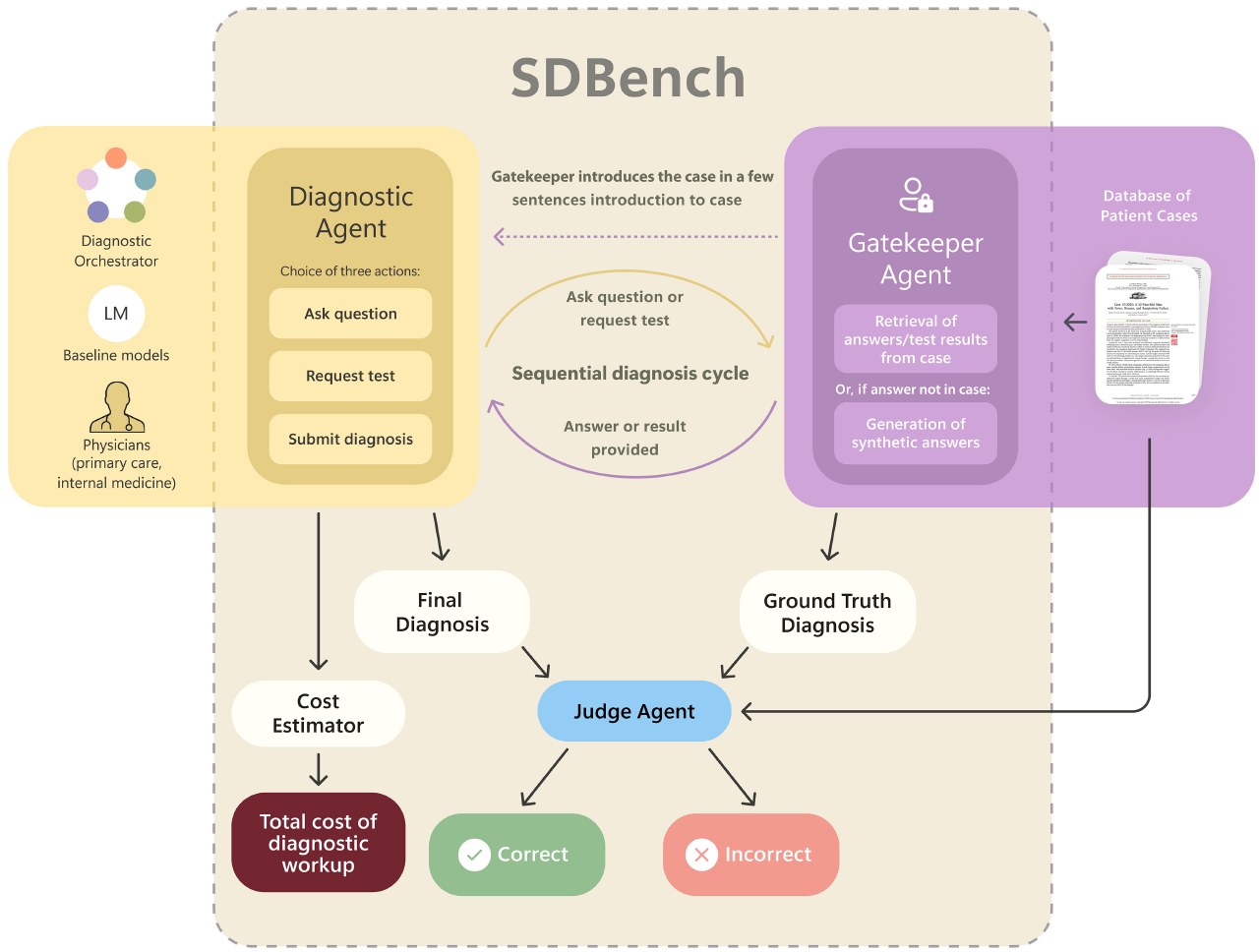
The research, published in the journal Science on October 22, utilized a new evaluation benchmark called SDBench. Unlike traditional tests, this benchmark requires participants to analyze conditions, ask questions, and select tests step-by-step to simulate real clinical processes. Microsoft noted that the system often identifies diagnoses at a lower estimated cost by optimizing test selection.
Microsoft plans to conduct further testing in a real hospital environment in partnership with Beth Israel Deaconess Medical Center. While the company aims to move toward medical superintelligence, it has not provided a specific timeline for commercial release. The system must undergo rigorous clinical validation and regulatory review before any potential deployment in daily medical practice.