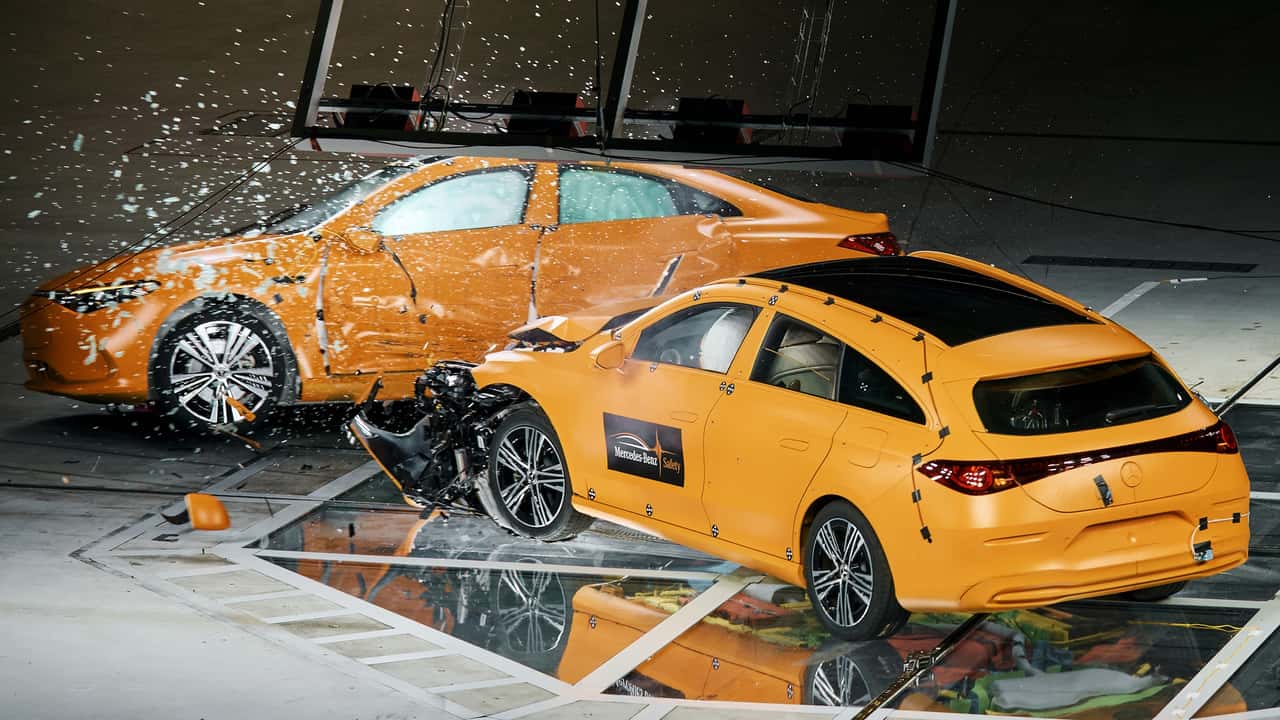
Mercedes-Benz conducted a high-speed side-impact crash test involving two production CLA models moving at 56 km/h. The company stated this is the first publicly performed test of its kind. A hybrid CLA shooting brake struck the driver side of a pure electric CLA to simulate a T-bone intersection collision. Each vehicle weighed approximately 2 tons, and 8 crash test dummies were placed inside to evaluate occupant safety.
The test aimed to replicate real-world intersection accidents where vehicles collide without braking. Mercedes-Benz reported that the passenger compartments of both vehicles remained intact after the impact. For the electric CLA, the test focused on the high-voltage battery located in the underbody. The company confirmed the battery pack remained undamaged, and the high-voltage system automatically disconnected upon impact to prevent electrical hazards.
The 8 dummies represented 4 adults and 4 children, with all measured biomechanical loads falling below the company's safety limits. Mercedes-Benz noted that it has analyzed approximately 6,000 real-world traffic accidents since 1969 to refine its vehicle designs. This approach, termed real-scenario safety, is a core component of the brand's development process.
Beyond this specific test, Mercedes-Benz conducts approximately 150 physical crash tests and 15,000 simulated tests for every new vehicle model developed. These figures significantly exceed standard regulatory requirements. The company continues to prioritize structural integrity and battery safety to ensure occupant protection in severe side-impact scenarios.