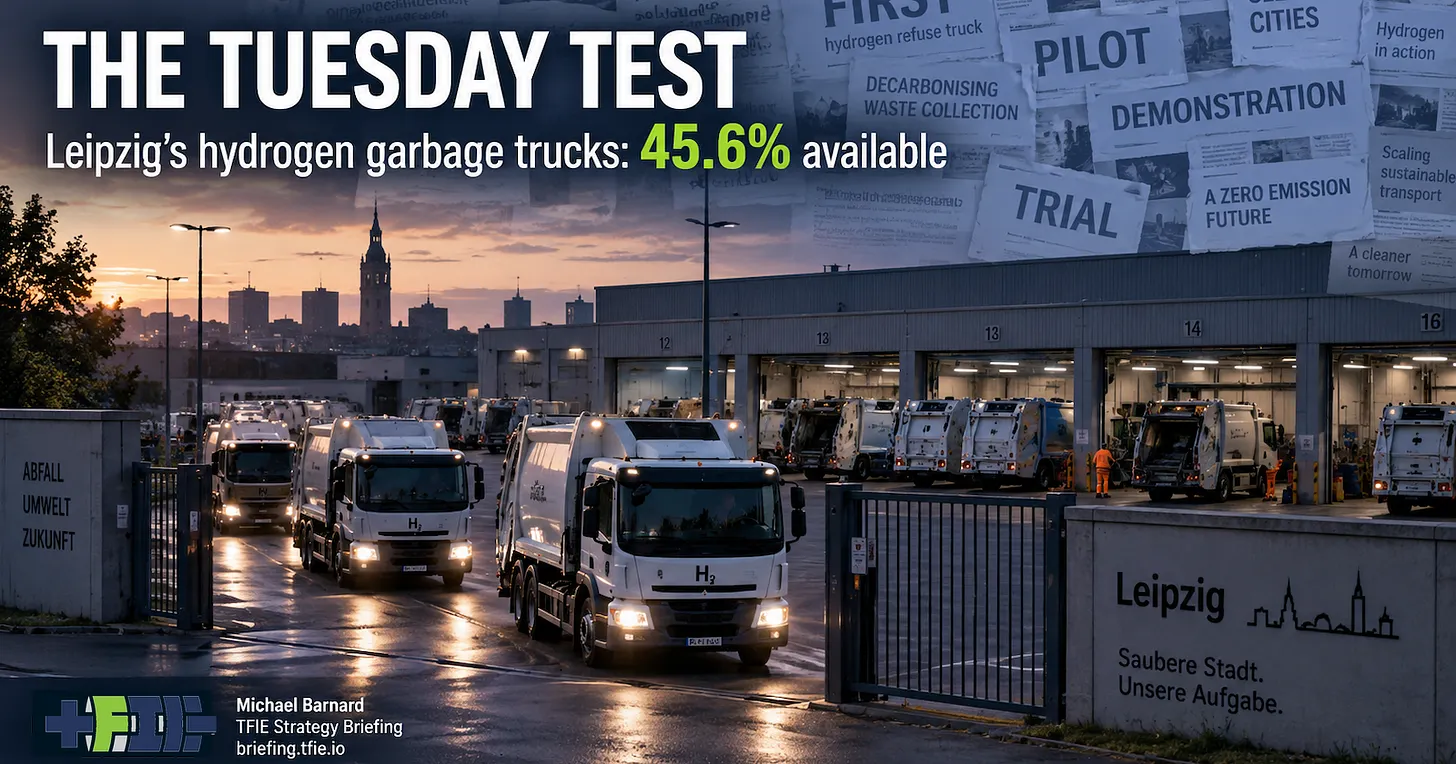
In 2024, the city of Leipzig acquired 16 FAUN BluePower hydrogen-powered refuse trucks, which accounted for approximately one-third of its total waste collection fleet. The city also established dedicated hydrogen refueling infrastructure to support these operations.
After two years of service, the city reported that the hydrogen fleet maintained an average availability rate of only 45.6%. In contrast, conventional diesel-powered refuse trucks in the city's fleet achieved an availability rate of approximately 80% during the same period.
Frequent technical faults, maintenance requirements, and repairs resulted in the hydrogen vehicles being unavailable for regular service. To manage the shortfall, the manufacturer provided conventional replacement trucks to ensure that waste collection routes were completed as scheduled.
While Freiburg operates 22 fuel-cell refuse trucks supported by redundant hydrogen refueling stations and local production, Leipzig's experience highlights the ongoing challenges of scaling hydrogen technology for municipal fleets compared to battery-electric alternatives.
In comparison, battery-electric refuse truck adoption has reached a larger scale globally. Republic Services in North America currently operates over 250 electric collection trucks, with plans to exceed 300 by the end of 2026, reporting that vehicle uptime has exceeded initial expectations.