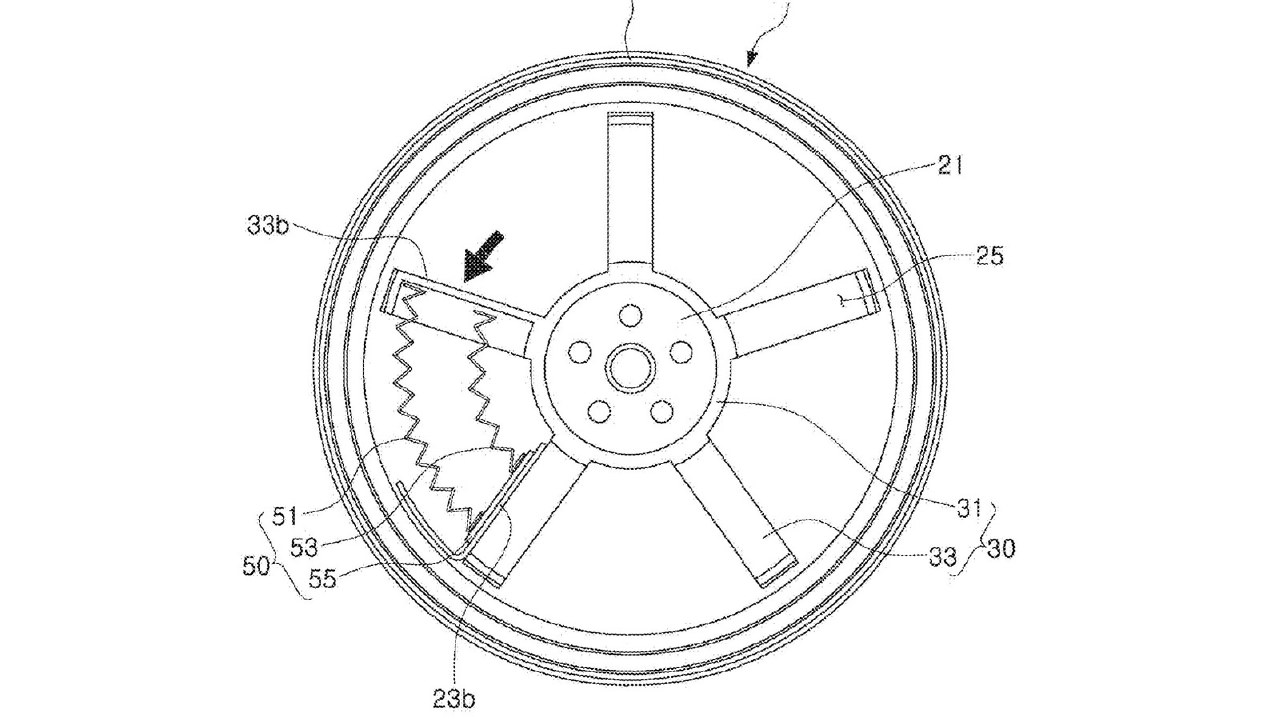
Hyundai and Kia have secured US Patent 12,779,902 B2 for a wheel design that adjusts between open and closed configurations. The system utilizes a rotating central ring and movable blades positioned behind fixed spokes to alter airflow. This mechanism aims to improve aerodynamic efficiency at high speeds while maintaining necessary brake cooling during city driving or heavy braking scenarios.
The internal assembly can be operated via electric motors, hydraulics, pneumatic actuators, or shape-memory alloys that respond to electronic activation. A spring-based mechanism is intended to return the blades to their open position once the actuator releases. The design also incorporates a dedicated control board mounted directly within the wheel assembly to manage these transitions.
According to Hyundai, wheels and tires contribute to approximately 25% of a vehicle's total aerodynamic resistance at highway speeds. By closing the wheel face, the automaker seeks to reduce drag and improve overall fuel economy or range. The company has not yet specified a target speed for activation or provided data on the exact reduction in aerodynamic drag.
While the patent offers a solution to the trade-off between cooling and aerodynamics, the complexity of the system raises potential concerns regarding maintenance and replacement costs. As of now, Hyundai has not confirmed plans for production, and the technology remains in the patent stage.