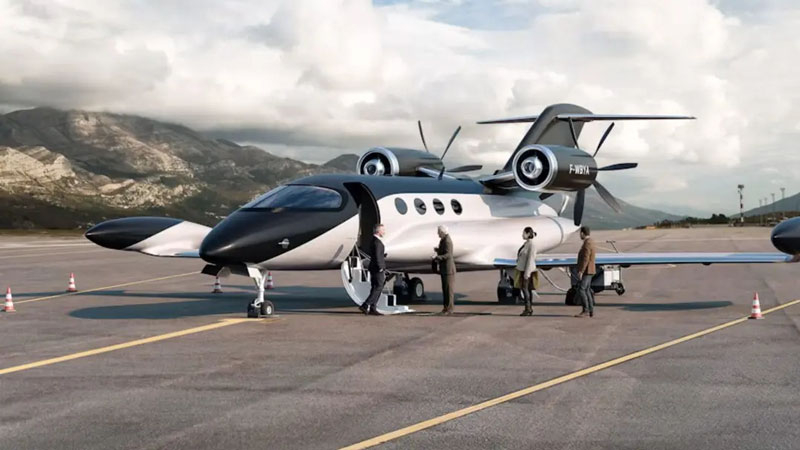
TAT Technologies and Beyond Aero are developing the One business aircraft, designed for six passengers with a range of 1,500 km. The project uses a low-temperature proton exchange membrane fuel cell, which generates electricity by combining hydrogen and oxygen.
Engineers face a significant thermal management challenge: a 1 MW power system requires dissipating a comparable amount of heat. Unlike jet engines that exhaust heat with gases, electric systems need dedicated cooling, which risks increasing aerodynamic drag.
To address cooling needs without compromising range, the design must integrate heat exchangers directly into the airframe. Additionally, high-altitude operation requires powerful compressors to ensure sufficient oxygen intake for the fuel cells.
The developers opted for gaseous hydrogen stored at 700 atmospheres instead of liquid hydrogen to simplify airport infrastructure and certification. This choice necessitates large storage tanks mounted above the wings alongside the electric motors.
The project has successfully completed the Preliminary Design Review phase. The team is now moving into detailed engineering and preparing for certification processes according to EASA and FAA requirements.