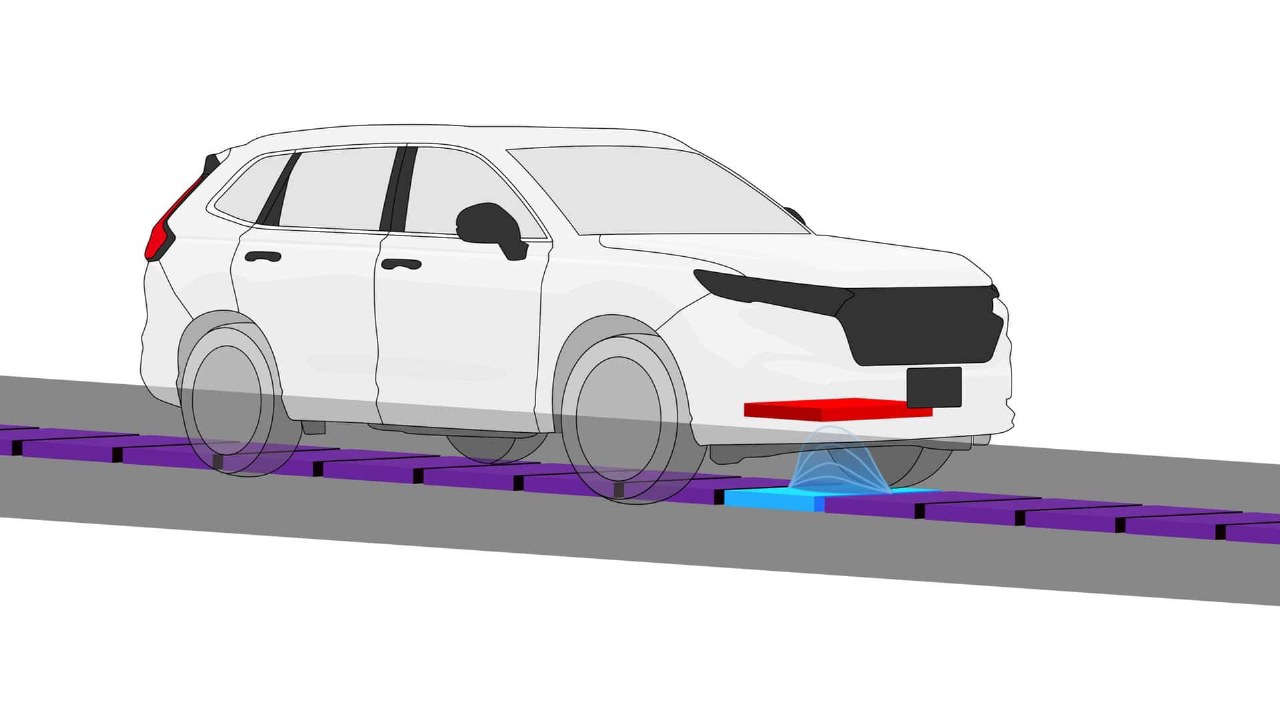
Honda, in partnership with Taisei Corporation and Taisei Rotec, has developed a dynamic wireless charging system for electric vehicles. The technology uses transmitter coils embedded in the road surface to create a magnetic field, which a receiver on the vehicle converts into electricity. The system is designed to charge vehicles while they are in motion, eliminating the need for stationary plug-in charging.
The hardware integrates the inverter and coil into a single unit, which simplifies installation into existing road infrastructure. Taisei provides a fast-responding direct current power system, while Taisei Rotec manages the construction methods to ensure road surface integrity. Honda has been researching dynamic wireless power transfer since 2021, with the current magnetic coupling project active since 2025.
Testing is currently focused on durability and safety. A previous test road in Satte confirmed that the system can support vehicles weighing approximately 44,000 pounds. A new test track at the T-FIELD/TAMURA site, scheduled for late 2026, will subject the system to 1 million wheel-load cycles at 11,000 pounds per wheel to simulate long-term wear and measure electromagnetic field leakage.
Public road trials are planned for the 2027 fiscal year, beginning April 1, 2027. The project aims to join the Tateyama Project, a trial on a 300-meter stretch of the E14 Tateyama Expressway in Chiba. Initial trials will target logistics and commercial trucks, with future plans to test the system with Honda's electric SUV lineup and increase power output to 150 kilowatts.