Historian William Cade from Baylor University identified a discrepancy in a historical record regarding the first solar storm to disrupt railway operations. A report in the journal Nature previously cited the year 1841 for a telegraph failure in Exeter, England. However, researchers discovered that the railway line near Starcross, where the incident allegedly occurred, did not open until May 1846.
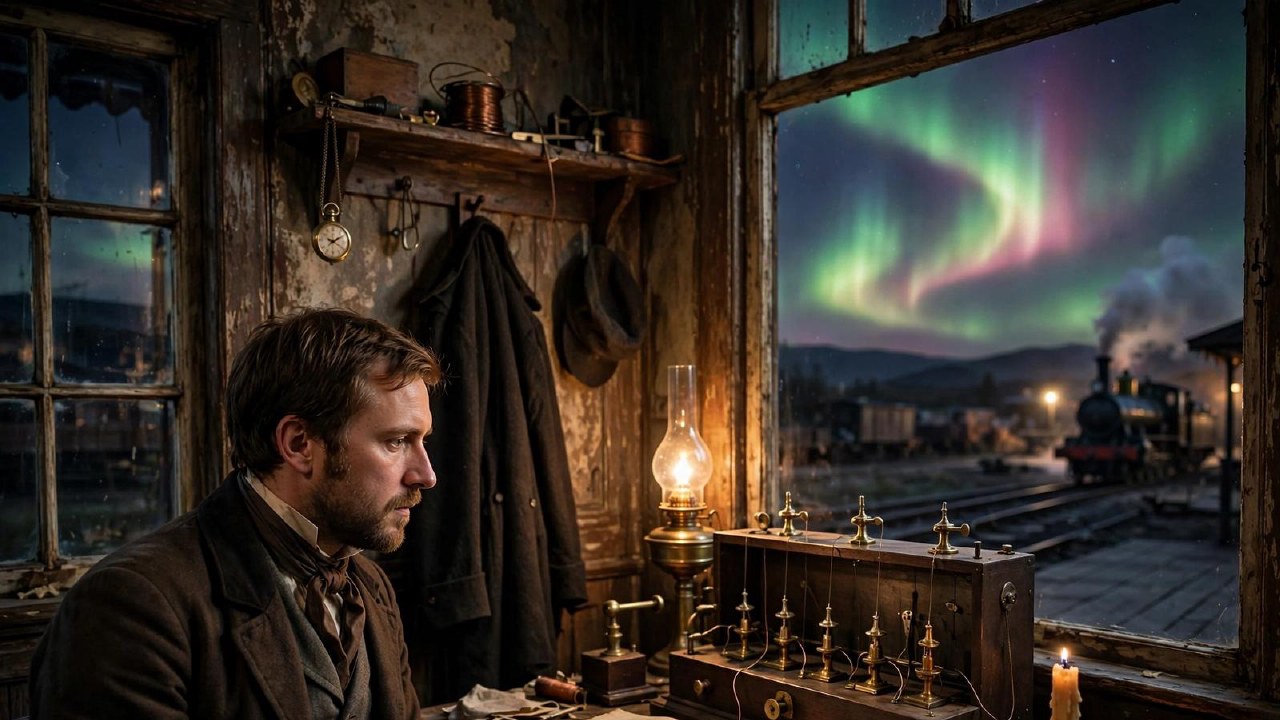
By cross-referencing train schedules and archives from the Greenwich Observatory, the team determined the actual date was October 18, 1848. On that evening, bright auroras were observed over England, coinciding with the train schedule mentioned in the original report. Experts conclude that the journal likely contained a typographical error, misprinting 1848 as 1841.
The incident involved the Cooke and Wheatstone telegraph system, which used magnetic needles moved by electric current. Geomagnetic disturbances induce currents in long conductors, affecting such equipment. Engineer William Barlow had previously reported similar needle fluctuations on railway lines during an aurora on March 19, 1847, confirming the vulnerability of early electrical infrastructure.
Precise dating of these historical events is essential for researchers reconstructing solar activity records prior to the era of modern instrumentation. By aligning descriptions of auroras, magnetic disturbances, and equipment failures, scientists can better map the history of solar cycles using archival data.