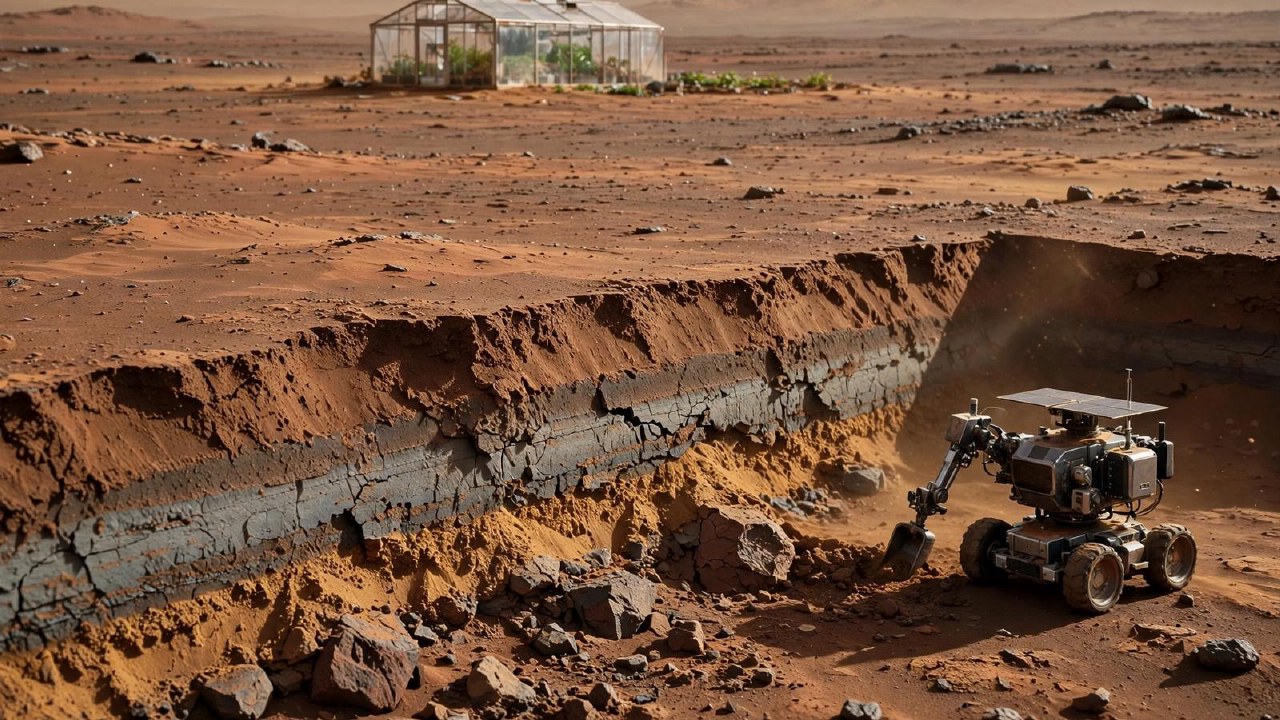
Researchers from the University of Sydney have developed a comprehensive map of Martian soil, covering nearly 92% of the planet's surface. The study utilized orbital observations, rover data, and planetary models to classify approximately 800 million distinct areas. This effort resulted in the creation of the Provisional Polythetic Areth Classification System (PPACS), which categorizes Martian regolith into 2,000 distinct classes.
The classification system evaluates soil based on texture, mineral composition, acidity, clay and gravel content, and water retention capacity. Each class received a suitability score modeled after Earth's soil properties. The highest-rated class, Nohibareth, achieved a score of 0.93. This soil type features a pH of 6.8, approximately 72% clay content, and a water retention capacity of 202 mm per meter.
Nohibareth deposits are located in the mid-latitudes, specifically within the Tharsis volcanic region, the central Arabian Terra, and the Elysium Planitia. However, this specific soil type covers only 0.14% of the Martian surface. Furthermore, about 73% of all classified soil types exhibit poor water retention, making them largely unsuitable for agriculture without significant processing.
The researchers noted that the current findings do not account for critical factors such as perchlorate toxicity, nitrogen availability, or the absence of organic compounds in the regolith. The map serves as a guide for future exploration rather than a selection of ready-to-use sites. Future efforts will focus on soil enrichment techniques to reduce the reliance of potential Martian colonies on Earth-based supplies.