

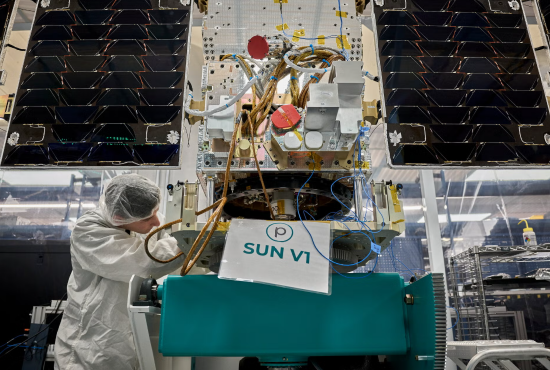
Google is launching its MVP experimental satellite on October 1, 2025, via a SpaceX Falcon 9 rocket from Vandenberg Space Force Base. The satellite, developed under the Project Suncatcher initiative, is designed to test the feasibility of running AI data centers in orbit using solar power.
The satellite is equipped with four Tensor Processing Units (TPUs) and provides computing power equivalent to a single server. It operates on approximately 1 kilowatt of power, generated by solar panels. The hardware is designed to handle simple AI queries and is expected to have a lifespan of one year, though it can remain in orbit for up to six years.
A major technical challenge for the project is heat dissipation in the vacuum of space. Google developed a custom cooling system using multi-layer thermal materials and radiator panels to move heat away from the chips. Due to thermal constraints, the chips can operate for approximately 15 minutes at a time before requiring a cooling period.
Project Suncatcher was initiated by Google VP Blaise Agüera y Arcas to address the rising energy consumption of AI. The project received approval from CEO Sundar Pichai and co-founder Sergey Brin in May 2025. Prior to the launch, Google tested its chips at the Crocker Nuclear Laboratory in February 2025 to ensure they could withstand space radiation.
Google plans to expand the project with a pair of satellites scheduled for launch next year. The long-term vision includes a potential constellation of over 80 satellites working in coordination. While the company has not disclosed project costs, it expects orbital data center expenses to reach parity with ground-based facilities by the mid-2030s.

