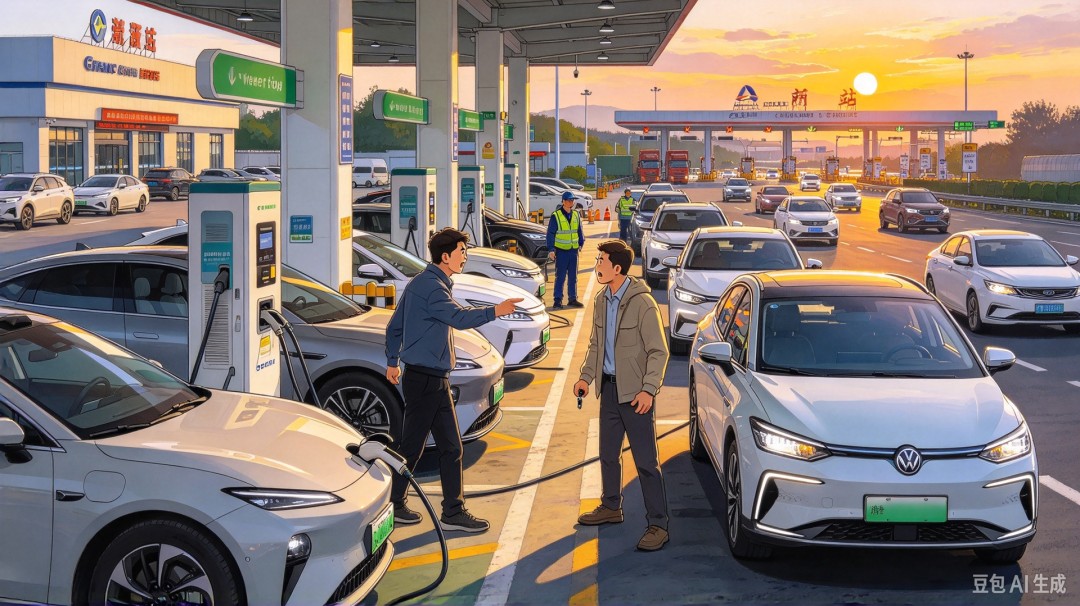
During the National Day holiday, electric vehicle owners faced significant charging delays at highway service stations. Many drivers reported waiting for hours, with one user receiving queue number 169 at a station. To manage demand, some stations implemented temporary rules, limiting charging to 80 percent capacity and automatically restricting power flow.
Tensions have risen between owners of pure electric vehicles and those driving plug-in hybrids or range-extended models. Pure EV owners claim that hybrid vehicles occupy the majority of charging spots despite having the option to use fuel. Conversely, hybrid owners argue that their smaller batteries require less charging time and that they can switch to gasoline mode if queues become excessive.
Data from the National Smart Car Networking Platform indicates that the peak charging demand occurred on October 1, between 7:00 and 20:00. High traffic and charging demand are expected to continue during the return phase, specifically on October 5 from 11:00 to 21:00 and October 6 from 10:00 to 22:00.
Industry expert Liu Hao suggests several solutions to mitigate these issues. Recommendations include doubling the number of charging piles on high-traffic routes, establishing more public charging stations near highway exits, and implementing dynamic zoning for different vehicle types. Additionally, integrating real-time queue data into navigation apps could help drivers plan their stops more effectively.