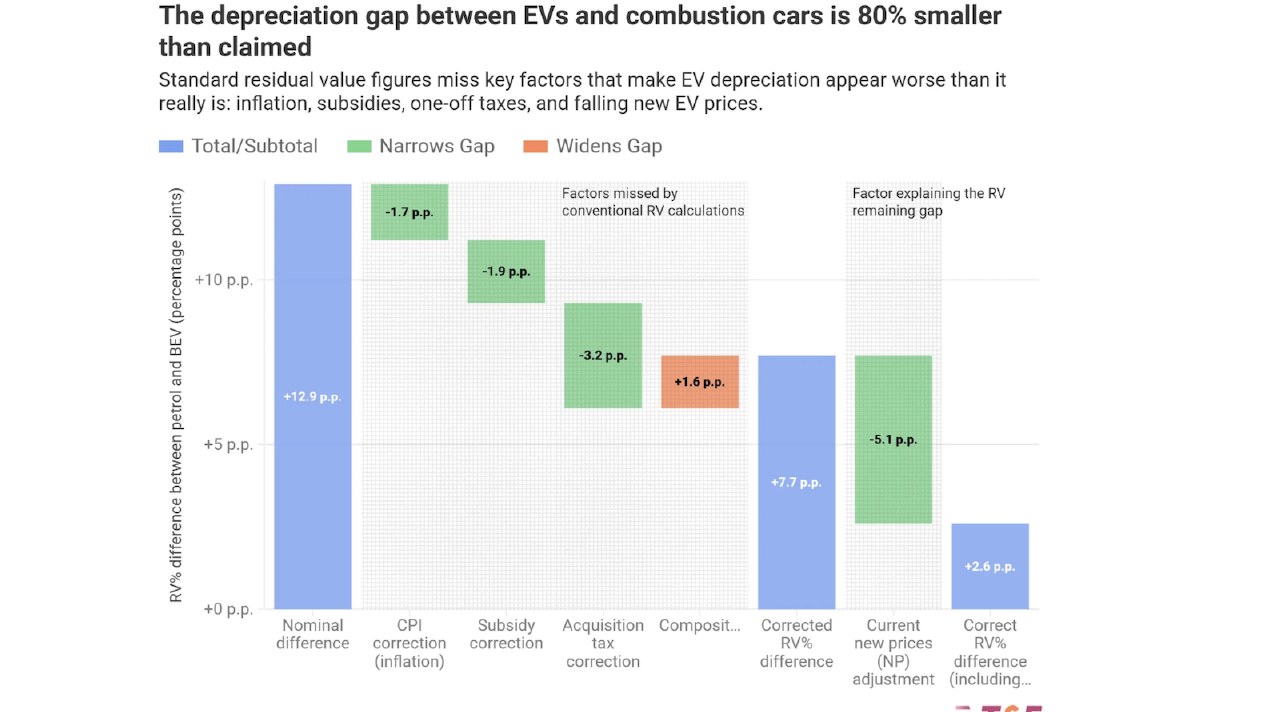
A new report from Transport & Environment (T&E) indicates that the residual value gap between battery electric vehicles and combustion engine cars is 80% smaller than previously reported. The organization attributes the initial perception of lower values to temporary market dynamics, policy design, and declining prices for new electric models rather than a lack of consumer demand.
Data shows that the decline in residual values for battery electric vehicles is stabilizing. In the second half of 2024, the value decreased by 2.3 percentage points, whereas in the second half of 2025, the drop slowed to 0.7 percentage points. This trend suggests that electric vehicles are currently exhibiting lower volatility compared to petrol-powered cars.
T&E advises leasing companies to extend lease terms to meet the rising demand for second-hand electric vehicles. Furthermore, the organization urges manufacturers to implement standardized battery health certificates and approved-used vehicle programs to increase buyer confidence. These measures are expected to help mature the secondary market.
The report also advocates for the adoption of the Corporate Clean Vehicles Regulation (CCVR) by European Union lawmakers. This proposed regulation aims to establish electrification targets for large corporate fleets. T&E argues that such policy intervention will ensure consistent demand for electric vehicles and help eliminate the remaining depreciation gap.