

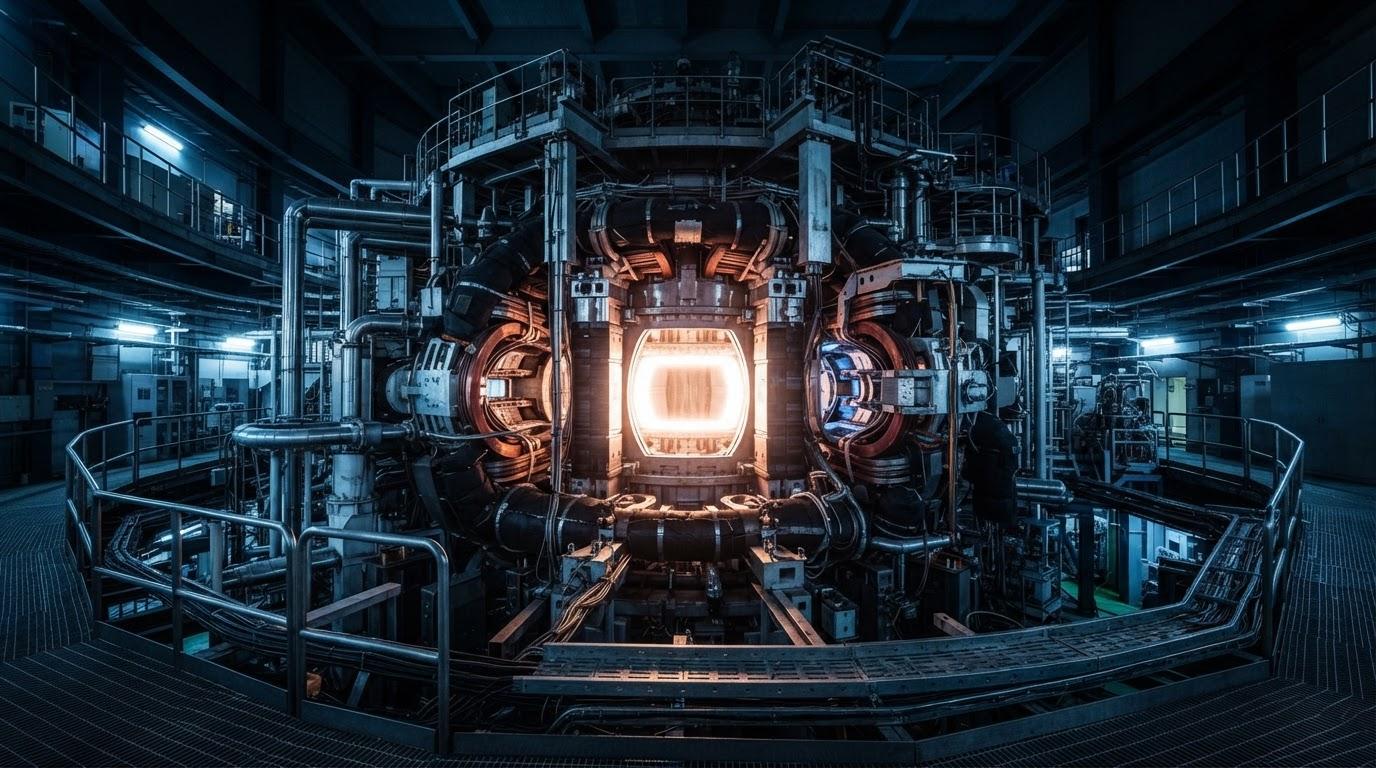
China has unveiled the concept for the HL-4 experimental fusion reactor, a new-generation tokamak designed for long-term steady-state plasma research. The project was presented at the Shanghai Fusion Energy Conference & Fusion Week 2026 by the Southwestern Institute of Physics, which has been developing the Huanliu series of reactors since the 1980s.
The HL-4 reactor will feature a fully superconducting magnetic system capable of generating a magnetic field of up to 25 tesla. This design aims to overcome the heating limitations associated with the copper magnets used in the previous HL-3 model, allowing for more efficient plasma confinement and potentially smaller reactor dimensions.
The facility will incorporate artificial intelligence to monitor plasma parameters and control the reactor during experiments. A primary objective of the project is to validate the long-term reliability of high-temperature superconductors under the extreme conditions required for fusion energy.
In 2027, the research team will relocate to a new specialized facility in Shanghai. This 500-meter-long complex will serve as a hub for the large-scale production and testing of magnetic systems. The HL-4 serves as a critical experimental stage before the development of a demonstration reactor.



