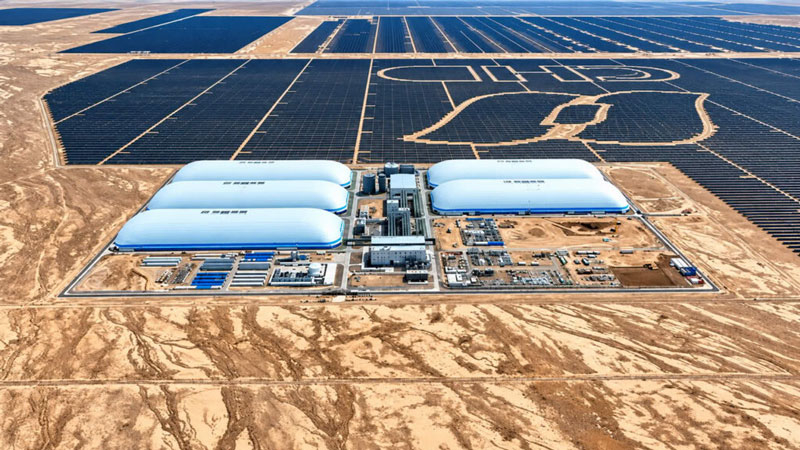
President Xi Jinping has proposed a national integrated computing power network, aiming to distribute processing resources similarly to electricity. This initiative builds on the 2021 East Data, West Computing strategy, which relocates data processing to regions with abundant energy and space while maintaining data generation in eastern urban centers.
Inner Mongolia has become a key hub for this infrastructure. As of May 2026, the region's computing capacity reached 315,000 petaflops, representing one-seventh of China's total. Of this, 297,000 petaflops are dedicated to intelligent computing for AI. Electricity costs in the area average ¥0.33–0.35 per kWh, with latency to Beijing under 5 ms.
Private investment in the region exceeded ¥200 billion by the first half of 2026, with 20 of China's 30 leading private computing firms operating there. In Ulanqab, 89 data center projects have been agreed upon, 86 of which focus on AI with a total capacity of 15 GW. Major companies like Huawei, ByteDance, and Alibaba are linked to this expansion.
State-owned China Mobile has expanded its facilities in Hohhot and Ulanqab, reaching a capacity of 20,100 petaflops. Its Hohhot center, completed in October 2026, utilizes 88% green energy and routes 90% of its capacity to the Beijing-Tianjin-Hebei region. This development aligns with the 15th Five-Year Plan for 2026–2030, which targets 9,800 EFLOPS by 2030.
The national strategy involves 70 transmission corridors and 17 interconnection nodes to coordinate computing clusters. While the framework is established, the 15 GW of committed capacity in Ulanqab remains under construction, and the effectiveness of the network will depend on the integration of these 17 nodes.