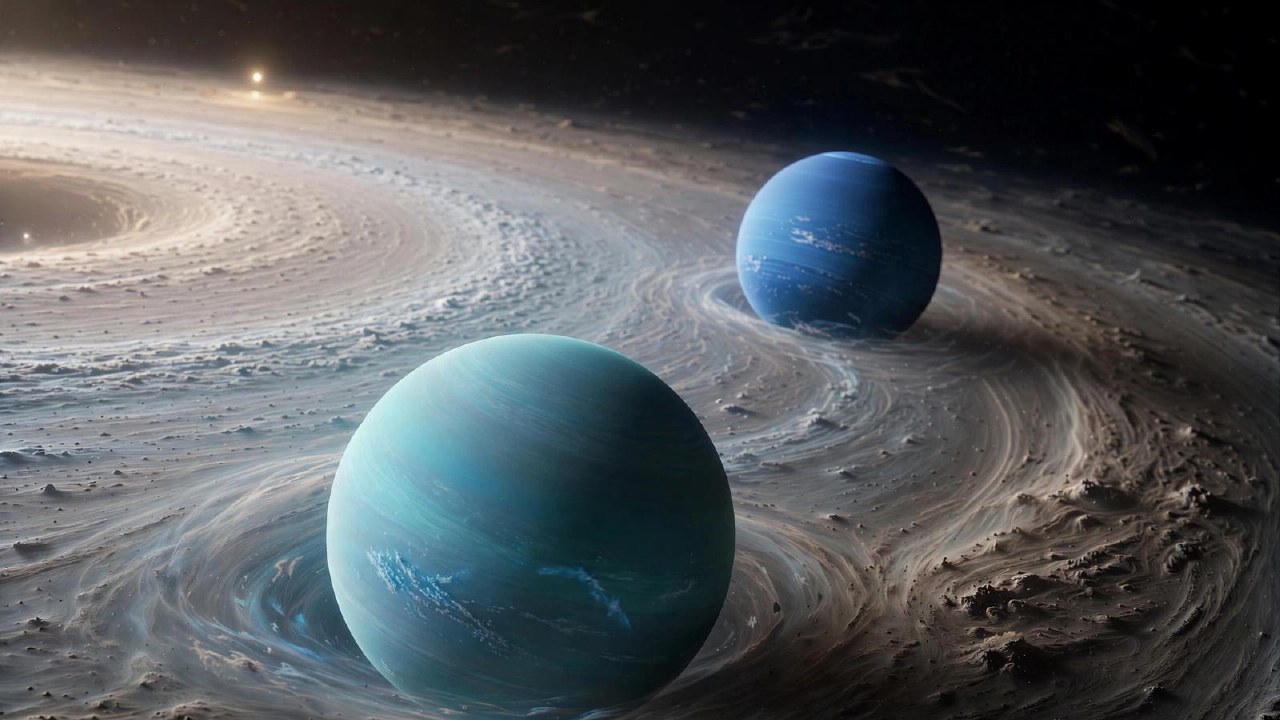
Researchers analyzed the carbon monoxide content in the upper atmospheres of Uranus and Neptune to infer their deep chemical composition. Data from the ALMA telescope shows carbon monoxide concentrations of 5.6 parts per billion for Uranus and approximately 200 parts per billion for Neptune.
Calculations indicate that the oxygen-to-hydrogen ratio in the deep layers is 62–177 times the solar level for Uranus and 222–342 times for Neptune. The carbon-to-oxygen ratio is 0.06–0.52 for Uranus and 0.02–0.12 for Neptune, compared to the solar value of approximately 0.5.
The findings suggest that Neptune may have formed closer to the Sun near the water-ice line, subsequently migrating to its current orbit. Uranus's composition is consistent with material formed further out, though the overlapping data ranges prevent a definitive conclusion on their formation history.
Uncertainties in atmospheric mixing efficiency and chemical reaction rates affect these estimates. Future direct measurements, such as those planned for the Uranus Orbiter and Probe mission, are expected to refine these models and aid in understanding similar exoplanets.