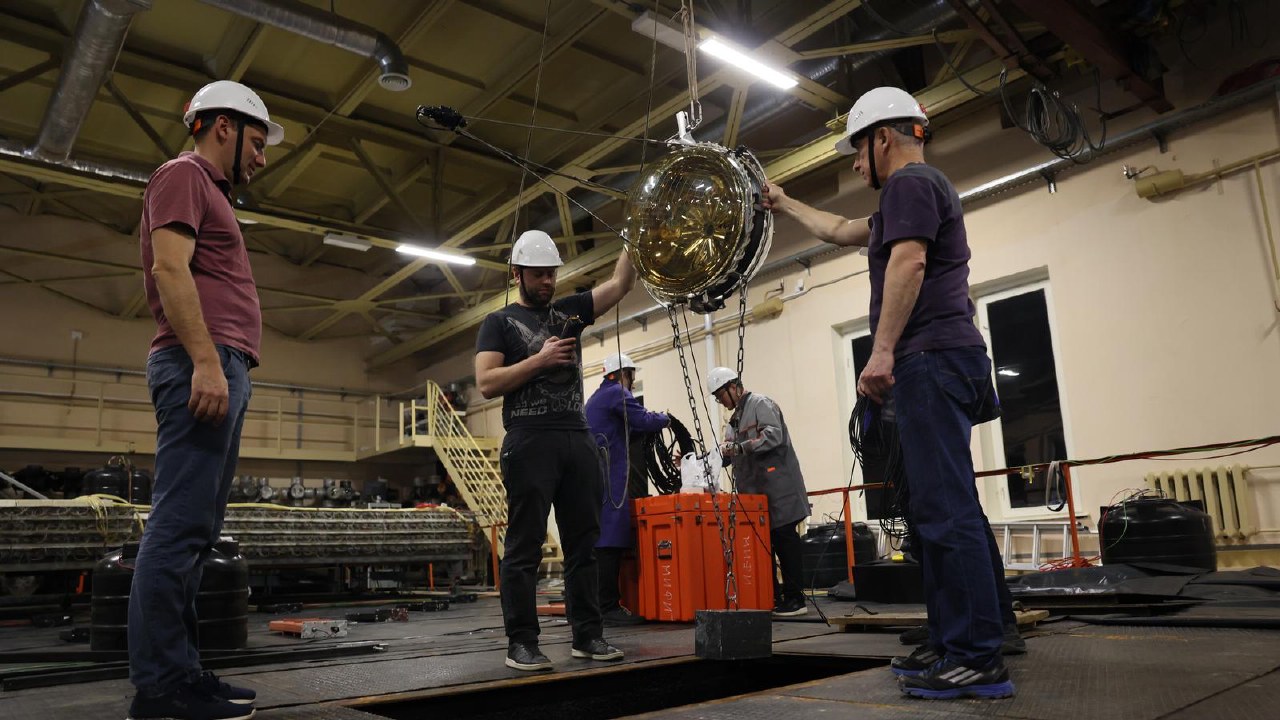
Researchers at NRNU MEPhI have begun calibrating two deep-sea optical modules for the Baikal-HUNT project. This Russian-Chinese initiative aims to build a neutrino telescope on the bed of Lake Baikal, designed to detect ultra-high-energy neutrinos starting from 100 TeV. The testing process is currently underway at the NEVOD astrophysical complex.
The full-scale telescope project envisions the production of approximately 2,300 deep-sea strings and 50,000 optical modules. Initial prototypes were deployed in Lake Baikal in 2025, and three strings equipped with 24 HUNT modules are currently operational underwater. The project is intended to succeed the existing Baikal-GVD experiment.
Calibration involves rotating the modules by 15 degrees weekly to assess their response to radiation from various angles. This process is expected to take 6–7 months. The methodology utilizes a 2020 patent from MEPhI researchers, which employs Cherenkov light from horizontal muons to ensure consistent data across all 50,000 units.
The standardization effort addresses discrepancies between existing experiments, such as the Baikal-GVD and IceCube telescopes, where neutrino flux measurements have differed by tens of percent. Future plans include processing the collected data at a dedicated data center to be constructed in Baikalsk, with access granted to both Russian and Chinese scientists.