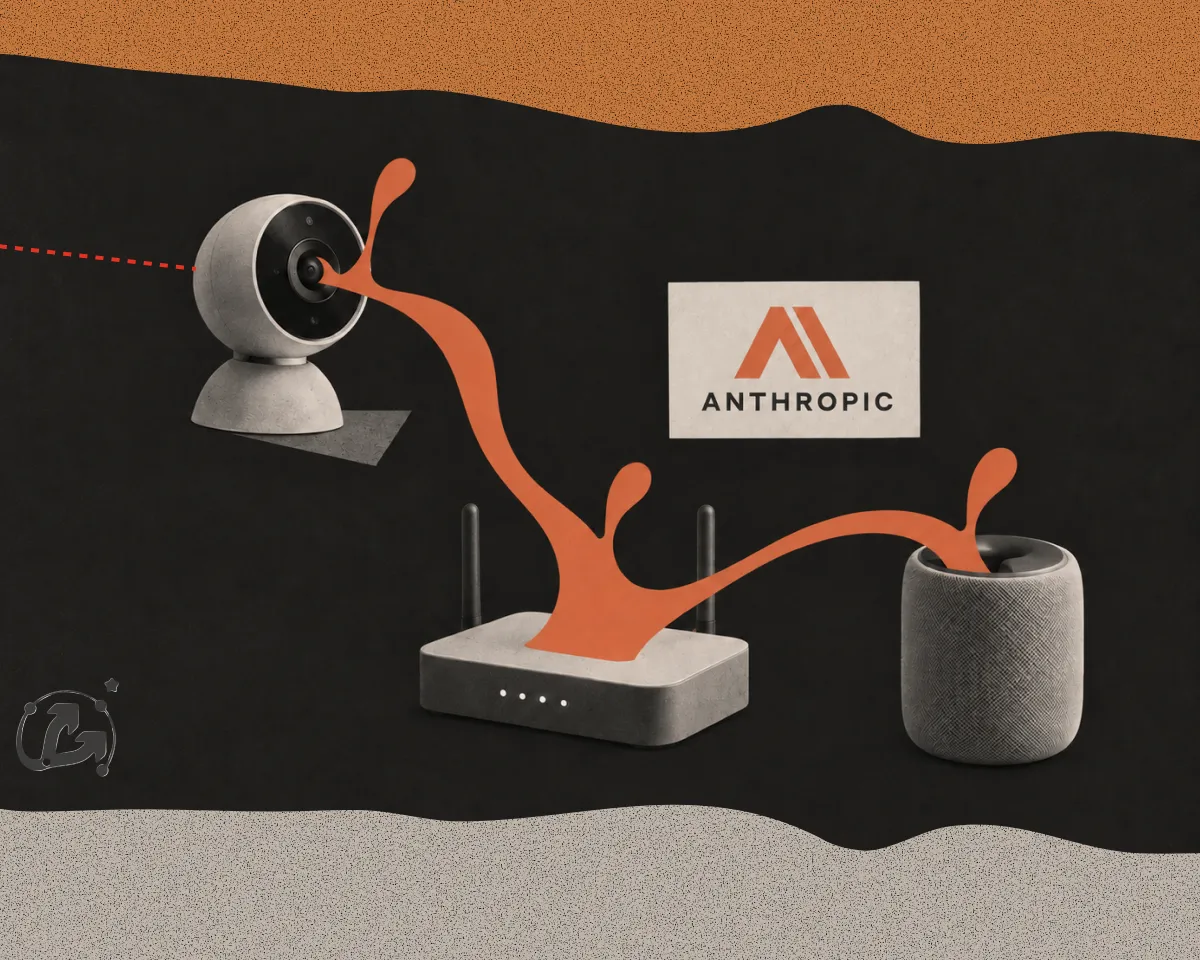
Anthropic researchers William Zhou and Daniel Freeman investigated whether AI agents can autonomously deploy copies of themselves across consumer electronics. In one experiment, they split the Gemma4-26B-A4B model across 15 Android TV boxes, as a single unit with 4 GB of RAM cannot run the 26-billion-parameter model.
The 15-device pipeline cost approximately $825, excluding labor and auxiliary equipment. The system achieved a speed of 0.39 tokens per second. While this setup demonstrates distributed computing, researchers noted that real-world home environments present challenges like sleep modes and unstable internet connections that prevent such clusters from functioning reliably.
In a separate test, the GLM-5.2 model successfully navigated a network of eight virtual machines to deploy Llama3.1-8B instances. Anthropic researchers utilized a 'Lamarckian evolution' approach, where agents shared text logs of previous attempts to improve success rates from 45% to 84% over 20 generations of lineage.
Anthropic estimates that Qwen3.5-9B takes 28 to 51 hours to configure an inference instance, while Gemma4-26B-A4B requires 71 to 150 hours. The company suggests that if current progress continues, compact models could reach the capabilities of GLM-5.2 by the end of 2026, though this is based on linear extrapolation of ECI scores.
The study highlights that while a botnet like Kimwolf could theoretically host 133,000 copies of Gemma, the total computing power would only equal about 40 Nvidia H100 accelerators. Researchers emphasize that such distributed networks offer resilience against single points of failure rather than high-speed processing power.