

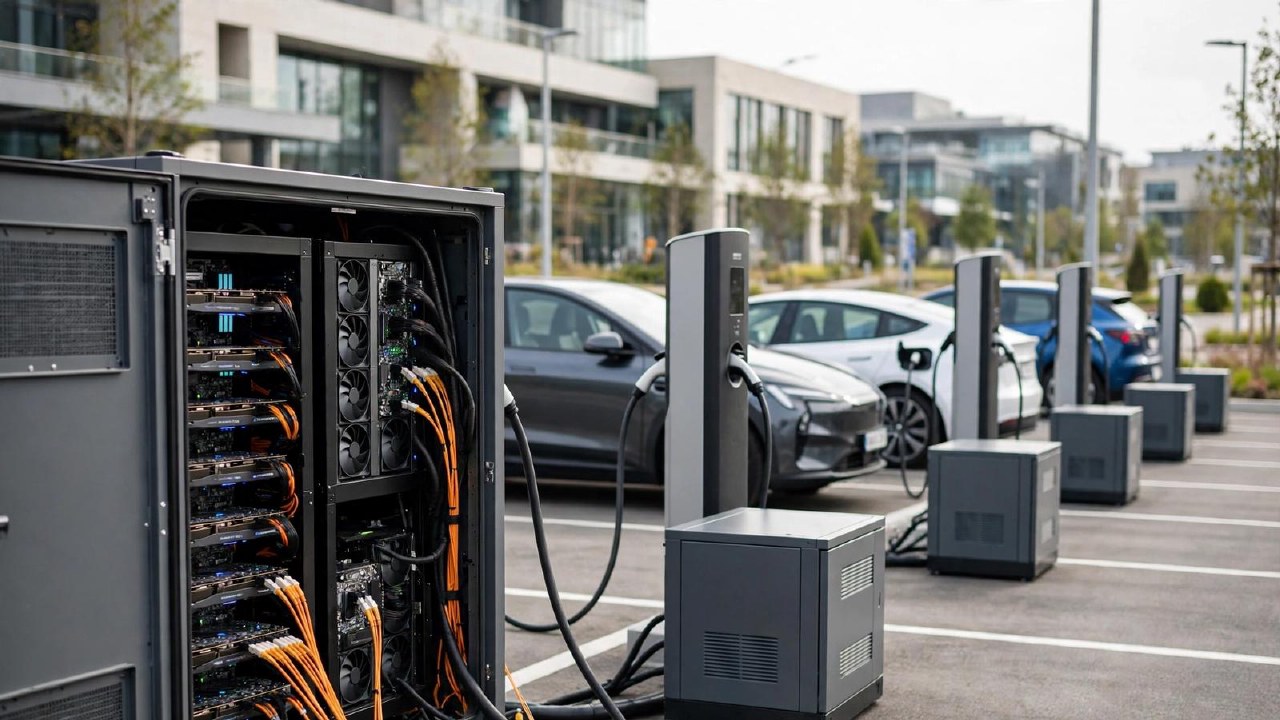
The American company Xeal has introduced the Laitent platform, designed to utilize idle power capacity at electric vehicle charging stations for distributed computing. The company operates a network of 1,600 sites across 500 US cities, currently holding a permitted power capacity exceeding 200 MW. Since these stations typically utilize less than 10% of their available load, Xeal plans to deploy up to 100,000 Nvidia GPU units.
To implement this, Xeal developed Laitent Pods, which are computing modules the size of a single parking space. Each module can house up to 48 Nvidia Hopper or Blackwell GPUs and operates without water cooling. The Laitent software manages energy distribution and computational loads, focusing primarily on AI inference tasks. The first module is scheduled for installation by the end of this year.
This infrastructure model aims to reduce deployment timelines from years to months by leveraging existing grid connections and permits. Xeal estimates that property owners could see their asset value increase by approximately $1 million with minimal or zero capital investment. Similar distributed computing initiatives on parking lots are also being explored by companies like Auddia and Tonomia.



