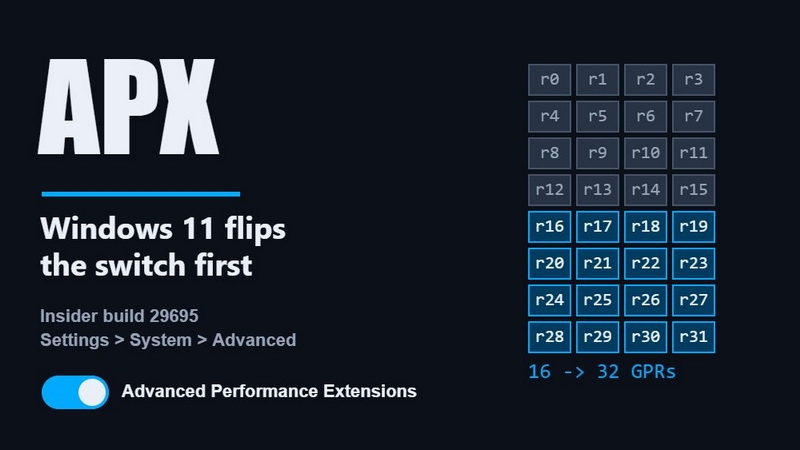
Microsoft has integrated a toggle into a recent Windows 11 experimental build to enable Intel Advanced Performance Extensions (APX). This feature aims to enhance system performance on future processors, though it is not yet mentioned in official release notes.
APX expands the x86-64 instruction set by doubling general-purpose registers from 16 to 32. This architectural change is designed to reduce memory access frequency and lower overhead by utilizing three-operand instructions and new conditional operations.
Intel simulation data using SPEC CPU 2017 suggests that software compiled with APX support could see a 10 percent reduction in load operations, over 20 percent fewer store operations, and a 10 percent decrease in total instruction count.
The technology will debut in upcoming Intel Nova Lake consumer processors and Diamond Rapids server chips. While compiler support is already available in GCC 15, Microsoft has also updated the WinDbg debugger to include APX debugging capabilities.
To leverage APX, applications must be recompiled to generate compatible instructions. Intel expects that most native software will be able to utilize these performance improvements without requiring manual source code modifications.