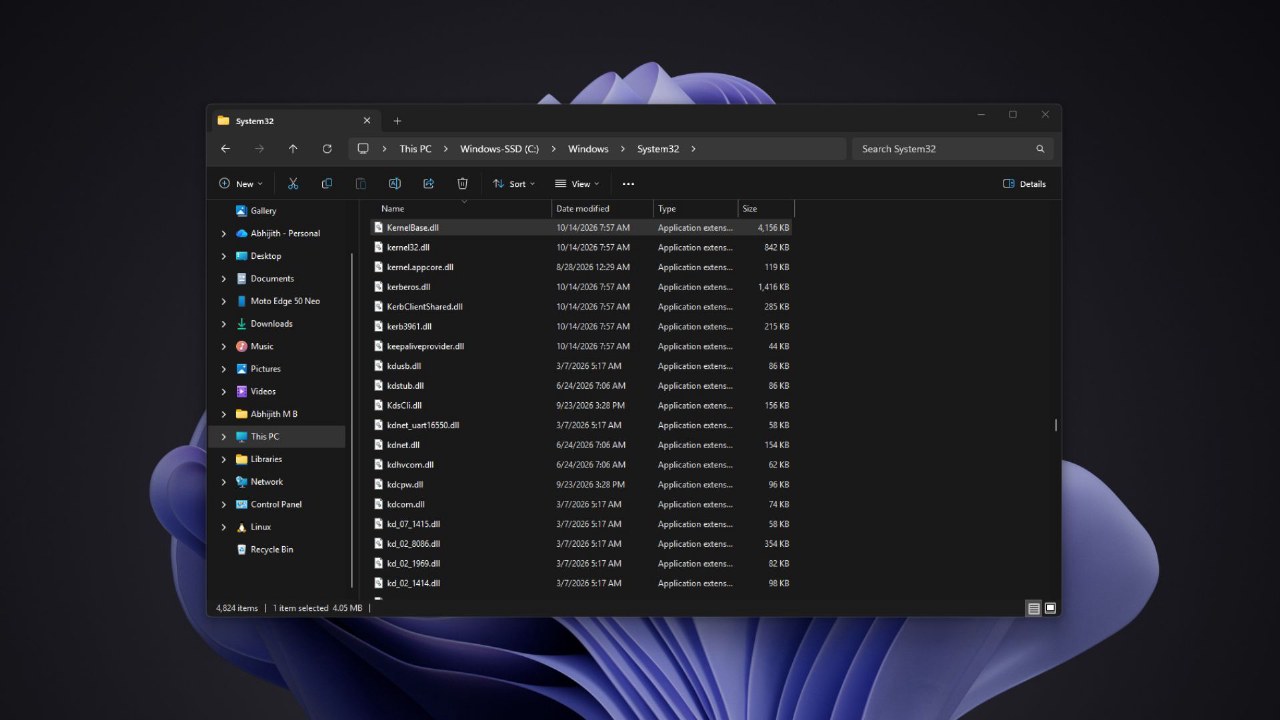
Microsoft continues to use the 8.3 file naming convention for core system files in Windows 11 26H2, including kernel32.dll, user32.dll, and ntoskrnl.exe. This legacy format, originating from the MS-DOS era, limits filenames to eight characters before the dot and three characters after, while excluding spaces and multiple dots.
The system remains case-insensitive, treating files like kernel32.dll and KERNEL32.DLL as identical. Microsoft veteran Raymond Chen noted that these constraints were inherited from CP/M. Although the CP/M directory format technically allowed for 10.3 naming, the specific choice of 8.3 remains unclear.
The primary reason for maintaining these legacy names is software compatibility. Many programs link to specific DLLs via their filenames; changing these names would break existing dependencies. Furthermore, Windows generates short aliases for long filenames to ensure compatibility with older installation processes and network configurations.
Historical constraints persisted long after the introduction of long filenames. Windows 95 did not mandate support for long filenames, partly due to enterprise server limitations. It was not until Windows XP that long filenames became a strict requirement for the system drive.