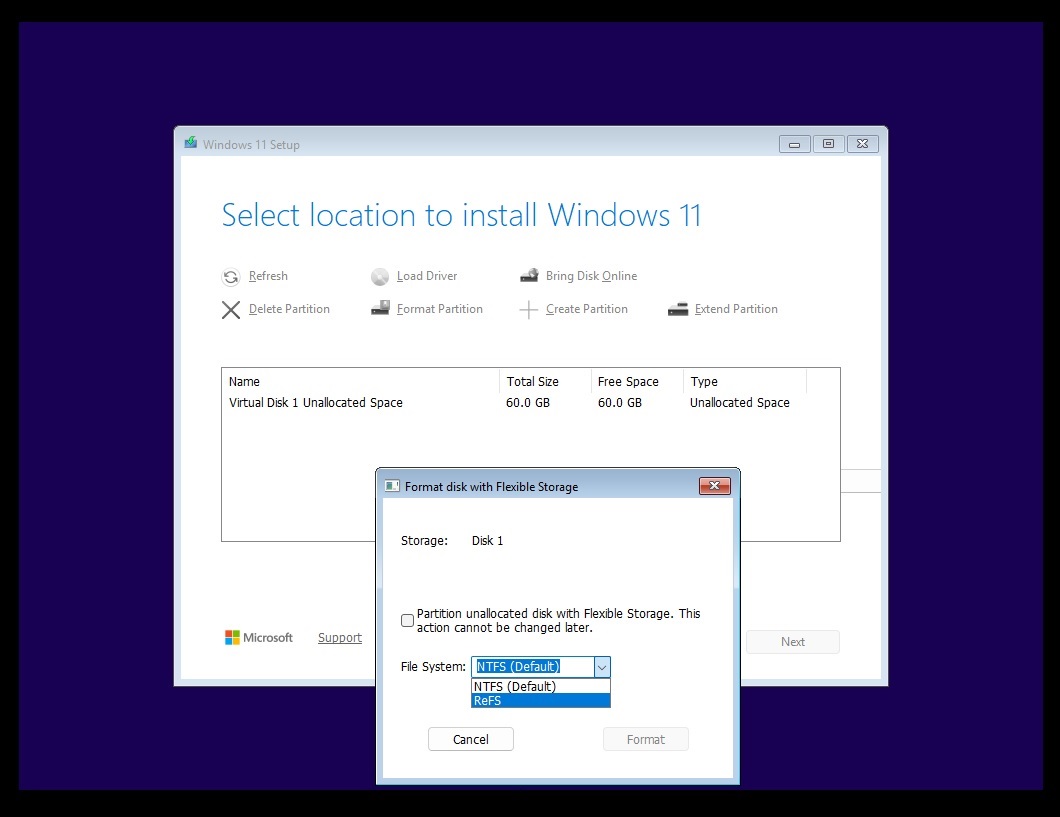
Microsoft is restricting the use of the Resilient File System (ReFS) on removable storage devices in Windows. Starting with the January 2027 security update, Windows will block the mounting of USB drives and external hard disks formatted with ReFS by default.
The transition follows a two-phase rollout. The first phase began with the October 13, 2026, security update, which introduced an audit mode to log instances of ReFS volumes on removable media without blocking access. The second phase in January 2027 will enforce the blocking policy.
Users who rely on ReFS for removable storage will need to migrate their data to supported file systems before the deadline. While the policy prevents mounting, it does not delete files; however, data will become inaccessible via standard Windows tools once the restriction is active.
Administrators can manage this policy via Group Policy or the registry using the RefsRemovableDeviceMountPolicy setting. Options include disabling the policy, auditing only, or enforcing the block. Changes require a system reboot to take effect.
Despite Microsoft expanding ReFS for specific use cases like Dev Drive for developers and large-scale virtualization, the company maintains that ReFS is not a universal replacement for NTFS. NTFS remains the standard for system boot and general-purpose removable storage due to broader compatibility.