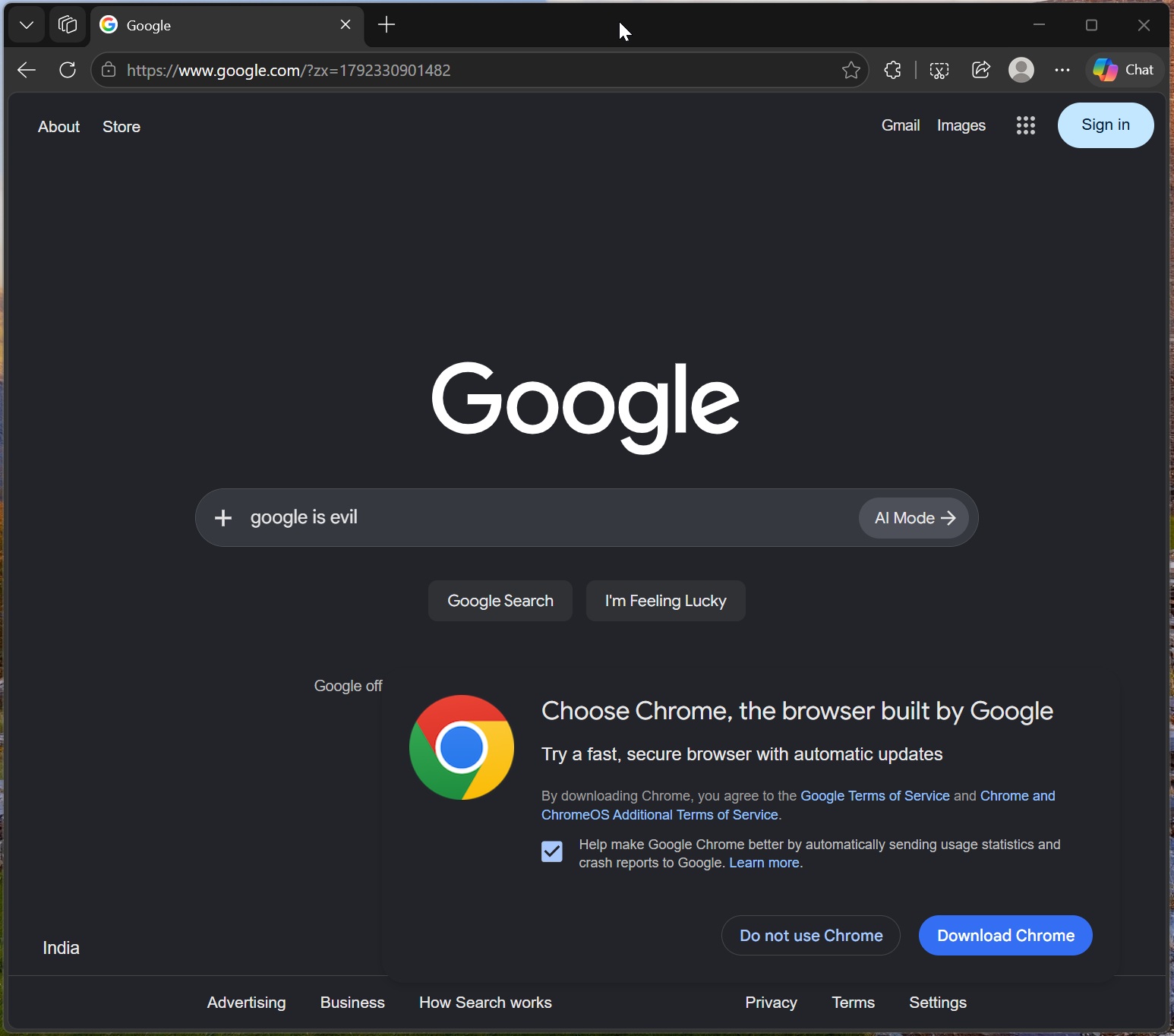
Google has begun displaying pop-up notifications on its search homepage when accessed via the Microsoft Edge browser on Windows 11. These prompts encourage users to switch to the Chrome browser by offering a direct download link. Upon clicking the download button, the Chrome installer automatically begins downloading, with the option to send usage statistics and crash reports to Google pre-selected.
In response to Google's tactics, Microsoft has implemented its own banner alerts within Edge. When the browser detects a user attempting to download Chrome, it displays a message highlighting that Edge is built on the same Chromium engine while claiming to offer superior trust and security. Microsoft has recently adjusted Edge's interface, reducing or removing features like Collections and the Sidebar to align more closely with Chrome's design.
The competition for browser market share remains intense despite the dominance of established players. Microsoft previously paid its internal Windows team to display Bing advertisements on the desktop in 2024. Furthermore, in January 2025, Microsoft utilized a strategy where Bing search results for 'Google' displayed a page mimicking the Google search interface to retain users within the Bing ecosystem.
Google's decision to target Edge users with pop-ups reflects a strategy aimed at capturing less tech-savvy users who may default to Chrome once they reach the Google search page. Both companies continue to leverage their respective platforms to influence user behavior, testing the limits of user patience in an ongoing effort to secure dominance in the browser and search markets.