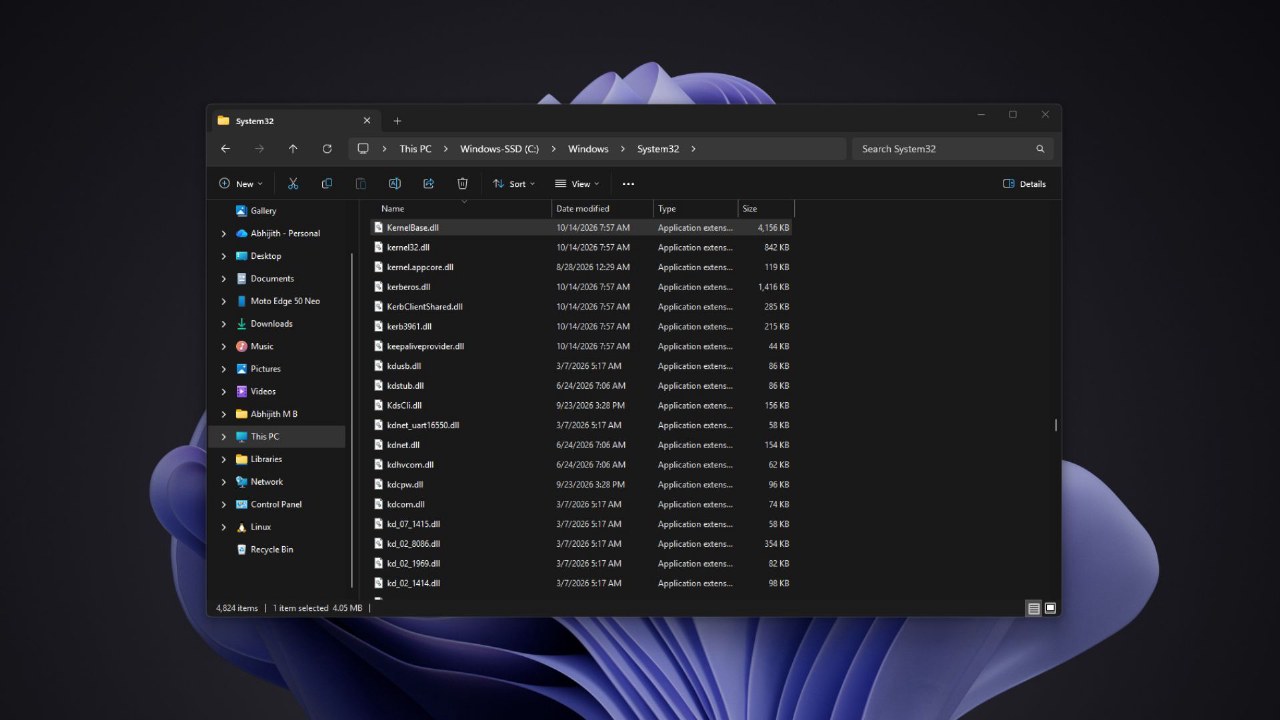
Windows 11 continues to use the 8.3 file naming convention for core system files, a standard originating from the MS-DOS and CP/M eras. Files such as kernel32.dll, user32.dll, and ntoskrnl.exe adhere to this format, which restricts filenames to eight characters and extensions to three.
Microsoft engineer Raymond Chen explains that these legacy names are maintained to ensure backward compatibility. Many applications rely on these specific filenames to access dynamic link libraries; renaming them would break existing software dependencies and cause system failures for older programs.
The persistence of these names is not a limitation of the modern Windows NT architecture, which supports long filenames and Unicode. Instead, it is a deliberate choice to preserve the software ecosystem, as the cost of updating millions of legacy applications outweighs the aesthetic benefit of modernizing file names.
Beyond file naming, Windows retains special device names from the DOS era, such as CON, NUL, and PRN. These are treated as special system targets rather than standard files. Microsoft maintains these behaviors to prevent breaking scripts and legacy software that rely on these specific identifiers.