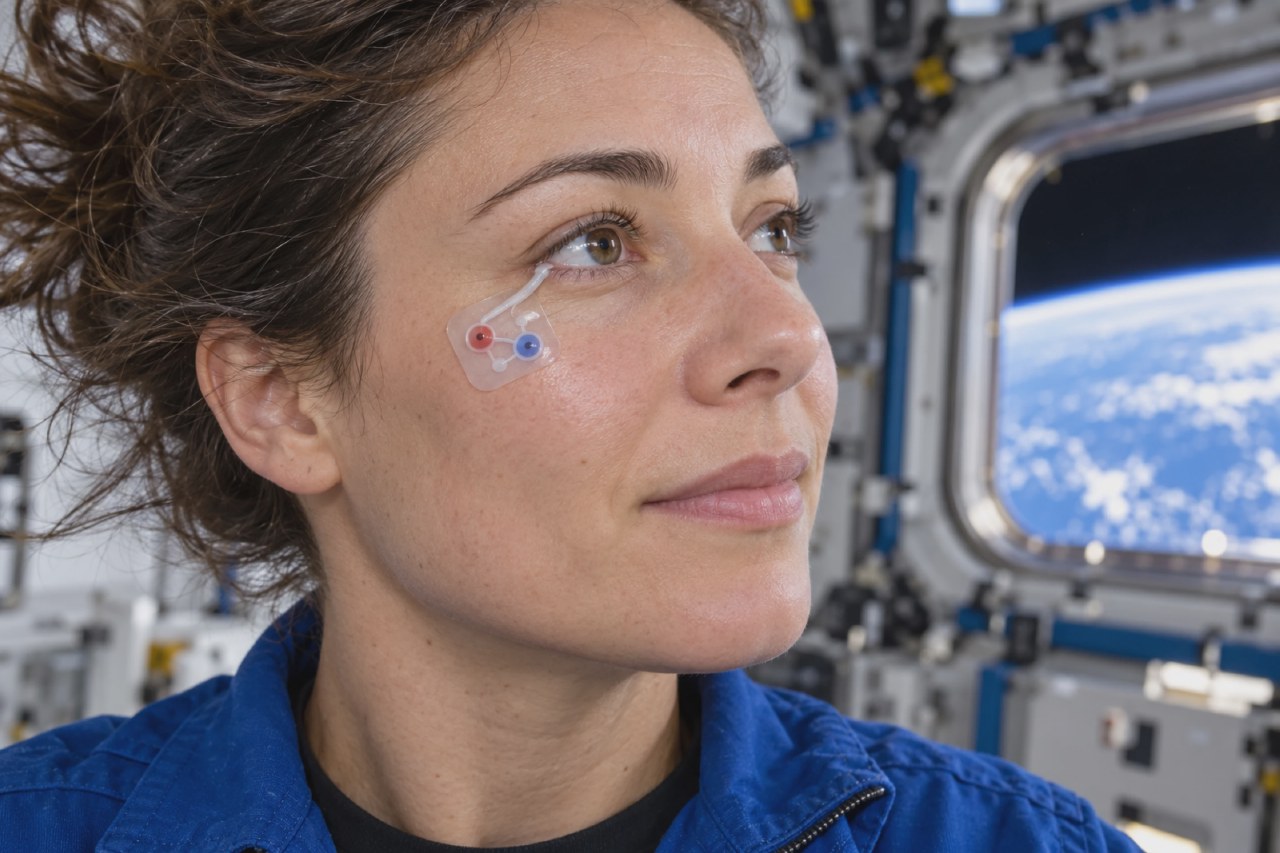
Researchers from KAIST and Seoul National University Bundang Hospital have developed a wearable microfluidic patch designed for administering eye drops in microgravity. The study, published in the journal Sensors and Actuators B: Chemical, addresses the challenge of using traditional gravity-dependent eye drops in space, where fluid shifts can increase ocular pressure.
The device consists of a flexible patch containing a reservoir, a reaction chamber, and microchannels. When a user presses the activation area, water reacts with ascorbic acid and sodium bicarbonate to generate carbon dioxide. This gas pressure forces the medication through the channels into the eye without needing batteries or external pumps.
A gas-permeable, liquid-impermeable filter separates the reaction chamber from the medication to prevent mixing. Testing showed consistent delivery across various gravity orientations, with performance comparable to traditional methods in ground-based human trials.
While the patch has not yet been tested in actual space environments, the team suggests it could eventually assist patients with conditions like Parkinson's disease, who struggle with manual eye drop application. Further clinical validation is required before the device can be used in medical settings.