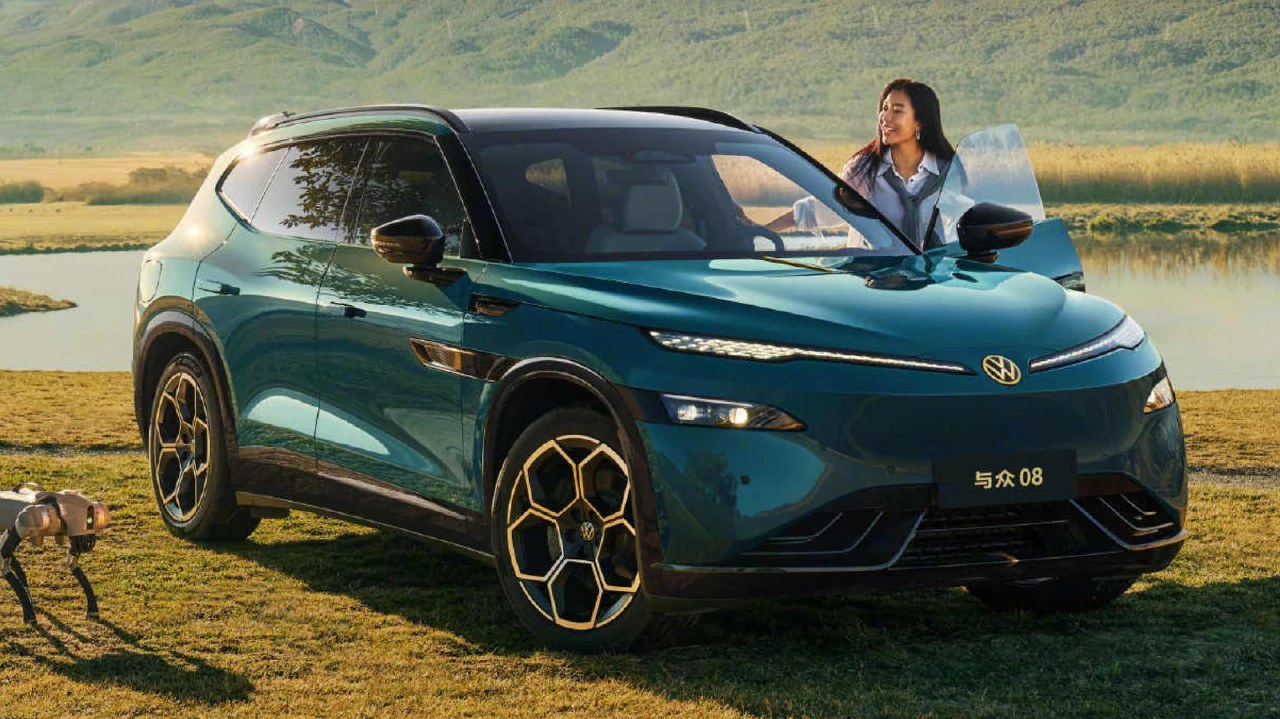
Volkswagen's profit share from the Chinese market has declined from nearly 50% to approximately 10%. Despite a $700 million investment for a 4.99% stake in Xpeng three years ago, the partnership has not yielded the anticipated sales results for their jointly developed electric vehicle models.
The ID. Unyx 08 model averaged 267 monthly sales between April and August, failing to meet the target of 3,622 units. Consequently, Volkswagen reduced its 2026 sales forecast for the model from 32,600 to 12,300 units, and its 2027 projection from 70,400 to 64,000 units.
Sales strategy issues contributed to the performance gap, as the ID. Unyx 08 is sold through only 166 Volkswagen Anhui dealerships, rather than the broader network of over 3,000 dealers shared with FAW and SAIC. Customers also noted that the vehicle lacks the competitive technology and charging speeds of rivals.
Volkswagen remains ambitious with the new ID. Unyx 09 sedan, targeting 4,900 monthly sales and 90,000 units annually by 2034. The model features 82-kWh and 95-kWh battery options and up to 496 horsepower, competing in a segment dominated by Tesla and Xiaomi.
To address weak local demand, Volkswagen is considering exporting China-built vehicles to Europe. However, such imports face significant hurdles, including a 35% duty on SAIC-produced vehicles. The company is exploring local production in Germany to avoid tariffs, which would require negotiations with the IG Metall union.