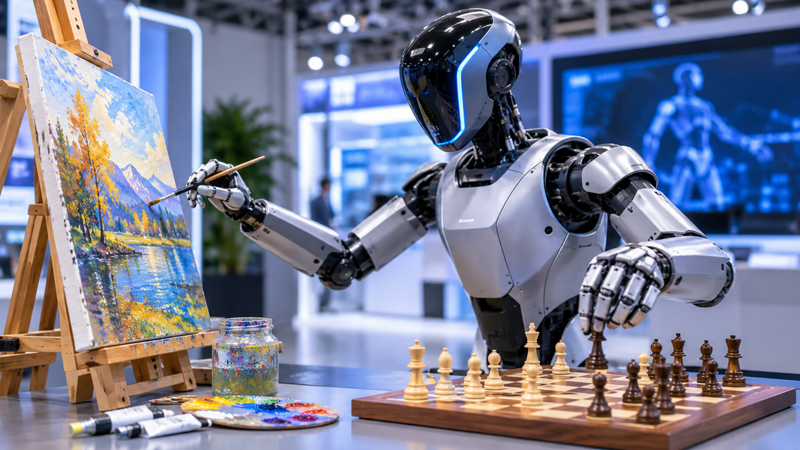
Unitree Robotics has showcased humanoid robots powered by OpenAI's GPT-6 Astra model. These machines can perform creative tasks like painting, mixing colors, and playing chess without prior specific training.
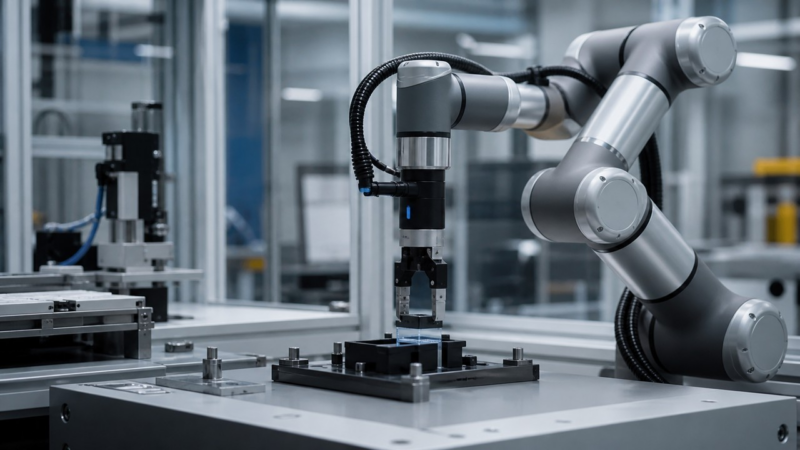
CEO Wang Xingxing identified the 'last millimeter' problem as the primary obstacle for physical AI. This refers to the difficulty in executing precise mechanical actions due to sensor inaccuracies and calibration issues.
To address this, Unitree is developing the 'Unitree Rehearsal' system. It creates a closed-loop feedback cycle where AI writes control code, tests it in simulations, and refines performance on physical robots.
Industry leaders highlight data scarcity and high hardware costs as major challenges. Moore Threads co-founder Wang Dong noted that developers are increasingly relying on synthetic data for training.
Moore Threads is working to supply its own chips to the Chinese robotics sector to reduce dependence on expensive Nvidia accelerators. Wang Xingxing expects GPT-7 to significantly improve physical intelligence within one to two years.