

Traditional relational databases and graph systems often struggle with complex multi-party relationships. This limitation forces developers to duplicate business logic across SQL queries, microservice code, and data marts, leading to inconsistencies.
The integration of LLMs and AI agents with corporate data faces similar challenges. Without explicit entity relationships, models often hallucinate because standard RAG processes only provide flat text fragments based on vector similarity, missing the underlying context.
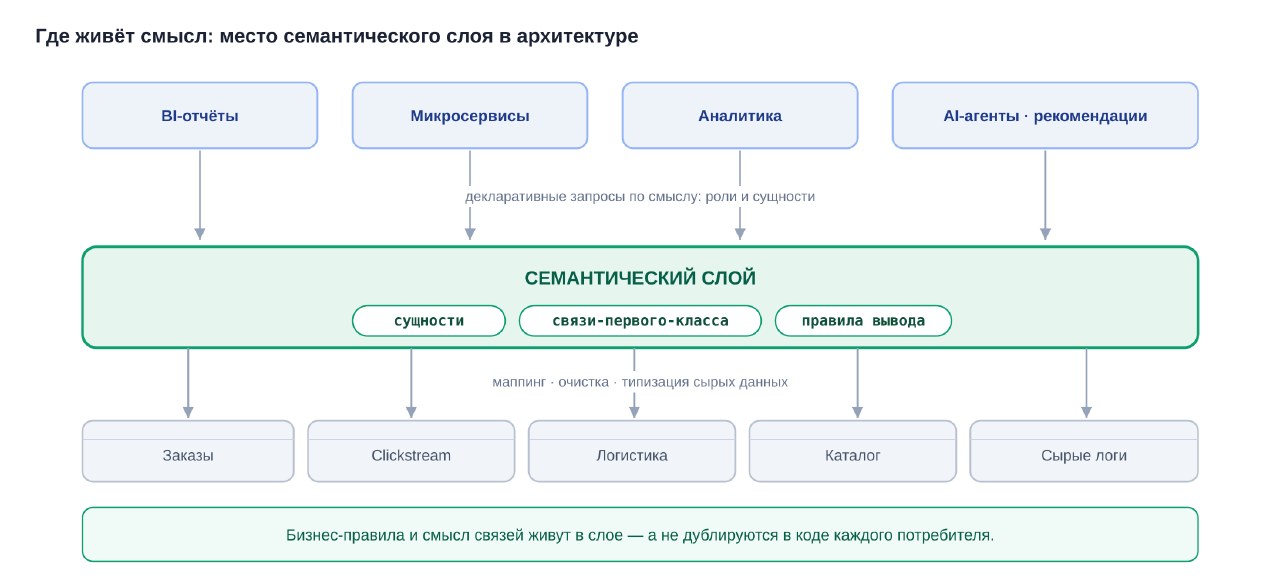
TypeDB introduces a semantic layer that defines entities, participant roles, and domain rules directly within the schema. This approach establishes a strict contract that serves both analytical tasks and language models, ensuring data integrity.
The database engine supports native n-ary relationships and dynamic logical inference. By moving business logic to the schema level, developers can replace complex SQL JOIN cascades with compact, role-based patterns.
A demonstration using a dataset of 65 752 orders and 469 977 web events shows that this declarative model prevents row bloat and metric divergence. It allows systems to maintain accurate business logic without redundant data processing.



