AI
Integrating Neo4j into Modern Data Engineering Pipelines
A data engineering project demonstrates how to integrate Neo4j with Kafka and ClickHouse to manage graph-based data alongside traditional analytical storage.
October 10, 2026, 03:41 PM·Хабр
A data engineering project demonstrates how to integrate Neo4j with Kafka and ClickHouse to manage graph-based data alongside traditional analytical storage.
A developer created a BERT-based classifier for Kodi TV listings, but discovered that a perfect F1 score was caused by data leakage in the training set.

VK has integrated a canary deployment model for data snapshots to improve the reliability of its ad-matching engine by validating updates on a subset of production traffic.

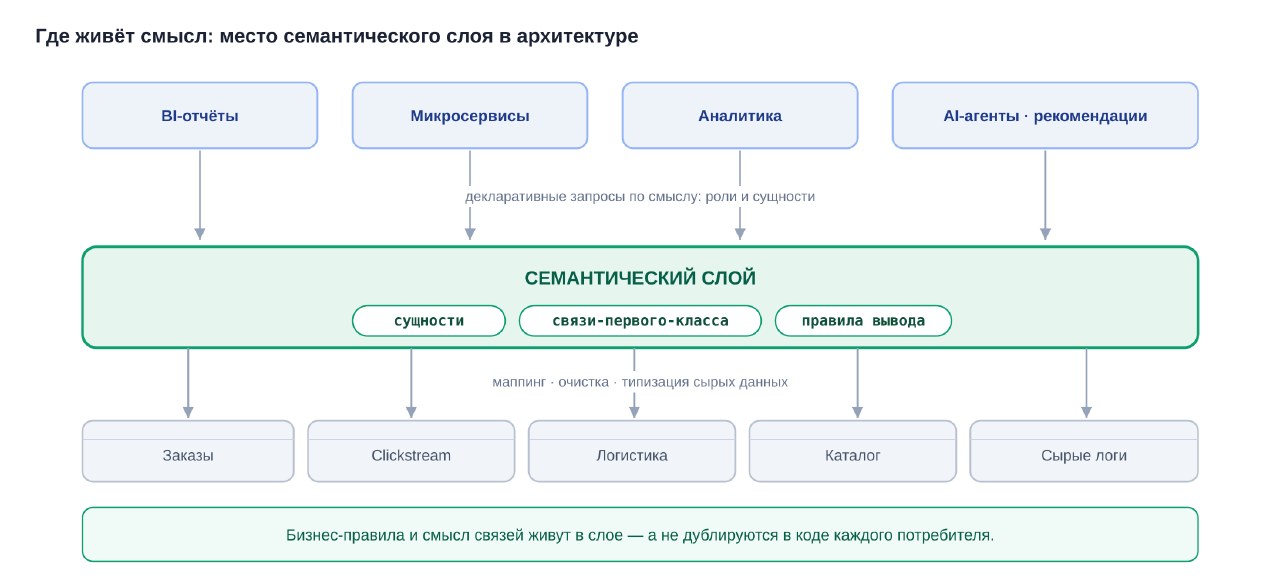
TypeDB addresses data modeling challenges for AI agents by implementing a semantic layer that replaces complex SQL joins with a declarative schema.
While AI agents can automate code generation for data engineering tasks, the role of the engineer remains essential for system design, reliability, and validation.

ROLFtech is using LLMs and a team of 21 experts to normalize a 35-year-old service directory of 474,712 entries, achieving 96.13% accuracy in mapping operations to vehicle components.

Selecting a SQL engine for data lakes requires balancing performance, concurrent workload stability, and architectural compatibility with open formats like Apache Iceberg.

Analytical data marts often suffer from incorrect totals due to JOIN errors and granularity mismatches, requiring specific aggregation strategies to ensure data integrity.

Delta Lake 4.3 introduces new selective overwrite APIs and shifts table operations to the Unity Catalog REST API to ensure cross-engine consistency.

SQL aggregation errors can lead to misleading business dashboards, often stemming from improper NULL handling, incorrect JOIN usage, and flawed ratio calculations.

AltScanner has detailed the ML architecture of its crypto scanner, focusing on data integrity and a linear regression model for intraday trading.
An analysis of why identical metrics in different BI reports often diverge due to calculation signatures, data granularity, and time-processing policies.