Roman Hartung, head of Thermal Grizzly, conducted a two-year study on liquid metal thermal interface materials. Observations using an electron microscope revealed that gallium reacts with copper radiators to form a solid compound, CuGa2. This layer has a thermal conductivity of approximately 100 W/(m·K), which is four times lower than that of pure copper.
The study showed that the solid layer grows by about 1 μm per day, reaching a thickness of 50–100 μm. While nickel plating reduces the layer thickness to 1–5 μm by forming NiGa5, it also results in lower thermal conductivity. However, nickel remains preferable as it absorbs less gallium and protects the underlying copper.
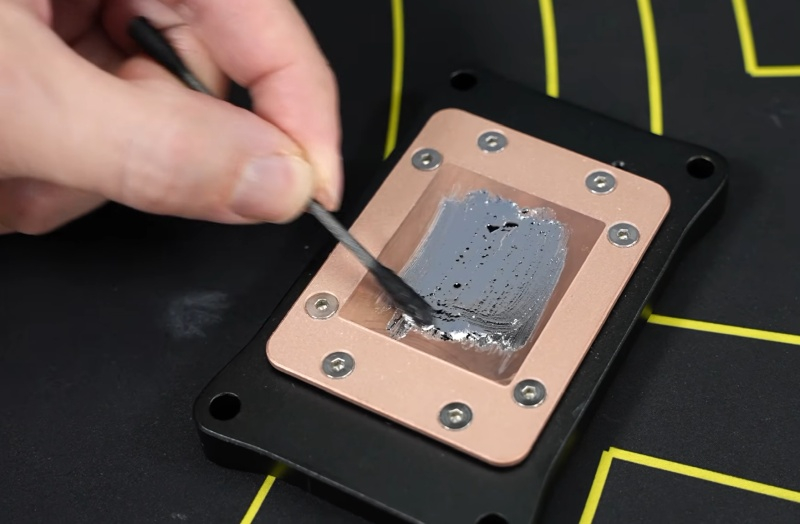
Liquid metal causes rapid degradation of aluminum, making it brittle within 30 minutes. For cleaning surfaces affected by gallium reactions, Thermal Grizzly offers a specialized kit including a 30 g paste, a polishing pen, and microfiber cloths, priced at $22.11.
The cost of gallium has risen significantly, increasing from €300 to €2500–3000 per kilogram over the past five years. China currently accounts for 99% of global supply, with export restrictions in place. Thermal Grizzly is now exploring new coating options and alternatives like the KryoSheet graphene pad.