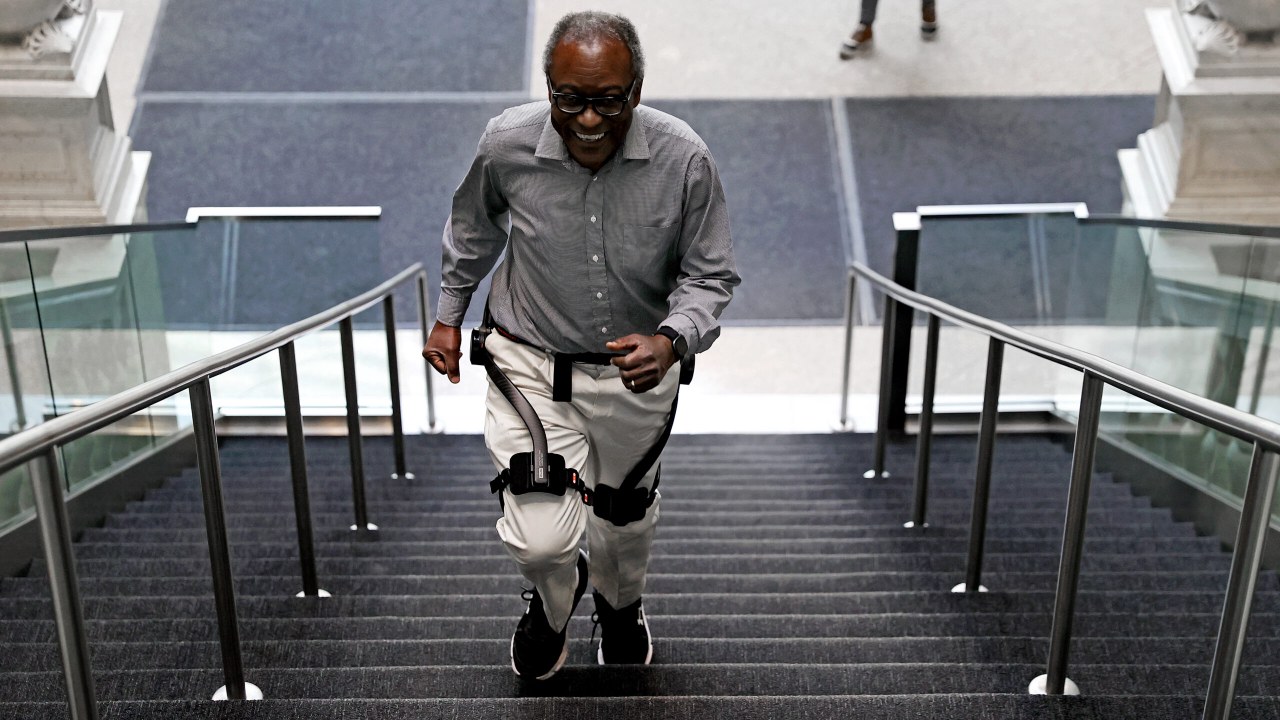
Powered exoskeletons are increasingly used in physically demanding sectors. IKEA utilizes SuitX devices for warehouse operations, while Ford, Boeing, and Mazda Toyota have integrated the technology into their assembly lines. In Finland, the ExoPELA project evaluated the use of exoskeletons for firefighting and rescue tasks.
The Ukrainian military reported using Hypershell exoskeletons on the front lines in early 2026 to assist soldiers in carrying artillery shells. Colonel Vitalii Serdiuk stated that the devices reduce fatigue, increase work speed, and extend combat effectiveness.
The current market for consumer and clinical exoskeletons is valued at approximately $500 million. Projections suggest the sector could double or triple in size by the mid-2030s, driven by advancements in robotic motors, sensors, and control systems.
Historical development dates back to an 1890 patent by Nicholas Yagn and a 1919 steam-powered walking support device by Leslie C. Kelley. By the late 1960s, the first actuated robotic exoskeletons with electronic control systems emerged, paving the way for modern adaptive and learning algorithms.
Current challenges include battery weight, energy density, and the need for regular recharging. Future research is exploring brain-machine interfaces and soft, textile-based materials to improve integration into clothing and footwear.