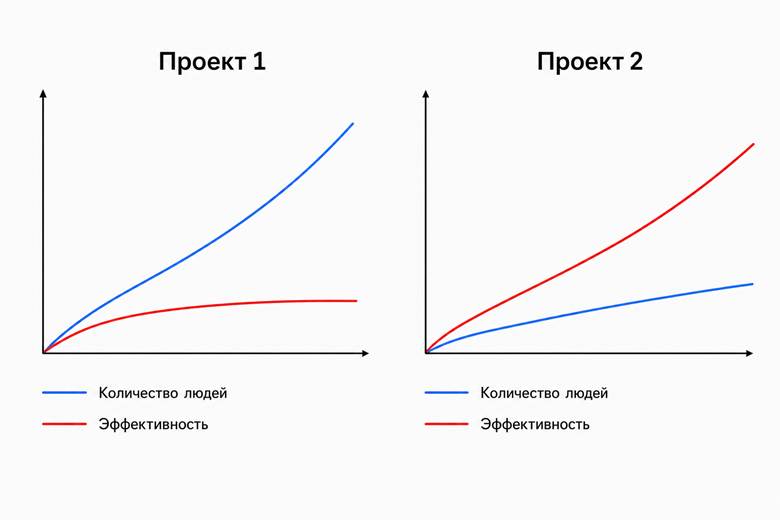
A comparative analysis of two corporate software projects reveals a significant disparity in efficiency. The first project involved a team of 50 people, yet failed to meet deadlines within a year. In contrast, the second project utilized a team three times smaller and achieved superior results in terms of successful delivery.
Data indicates that the first company experienced an exponential increase in headcount, which directly correlated with a decline in productivity and Time-to-Market metrics. While the payroll budget grew, the actual speed of feature delivery decreased. The second project maintained a stable team size while showing a consistent upward trend in productivity.
The author attributes these performance differences to architectural decisions regarding module dependencies. In systems with poor architecture, technical implementation details create tight coupling, where a single change necessitates modifications in multiple areas. Maintaining clean architecture requires strict team discipline and a focus on design principles.