Managing Multiple Payment Gateways: A Case Study
A developer shares insights on managing multiple payment providers in a global bot project, highlighting the transition from five integrated services to two active ones.

A developer shares insights on managing multiple payment providers in a global bot project, highlighting the transition from five integrated services to two active ones.

Developers using AI assistants like Claude face the risk of losing architectural control as codebases expand, necessitating structured documentation and rigorous workflow standards.

AI agents enable rapid implementation of complex tech stacks, but reliance on them can lead to architectural bloat and a loss of engineering expertise.

AI agents reduce coding effort but often increase system complexity, requiring developers to shift from writing code to managing architectural integrity.

The developers of the Ya Zdorov health assistant have moved away from using LLMs for memory management, opting for a structured, code-driven architecture to handle long-term health data.

The Fintech Association has launched the AI Digital Index, a new framework allowing financial firms to evaluate their AI architecture maturity across 19 domains.
The Interpretable Context Methodology organizes AI agent workflows through directory structures and text files instead of traditional orchestration frameworks.

SimbirSoft developers outlined their strategy for managing technical debt during the development of new features for the Urent mobile application.

A solo developer shares a framework for managing AI-assisted coding in a SaaS project, focusing on UI design systems, automated testing, and synchronization logic.

A developer built a custom remote access tool using AI, transitioning from full automation to a hybrid model after an initial failed attempt with 120,000 lines of code.

Corporate GenAI platform design should prioritize functional requirements and security boundaries over early technology selection to avoid unnecessary infrastructure complexity.

A no-code platform developer optimized Telegram bot hosting by using a shared PostgreSQL queue and a 5 KB runtime, supporting hundreds of bots in a single Node.js process.

WhatsApp employs a multi-device model where smartphones act as primary devices, while secondary clients function as companions with delegated access.

Diasoft has upgraded its Digital Q.Archer platform with a new logic diagram editor that integrates architectural design directly with automated code generation.

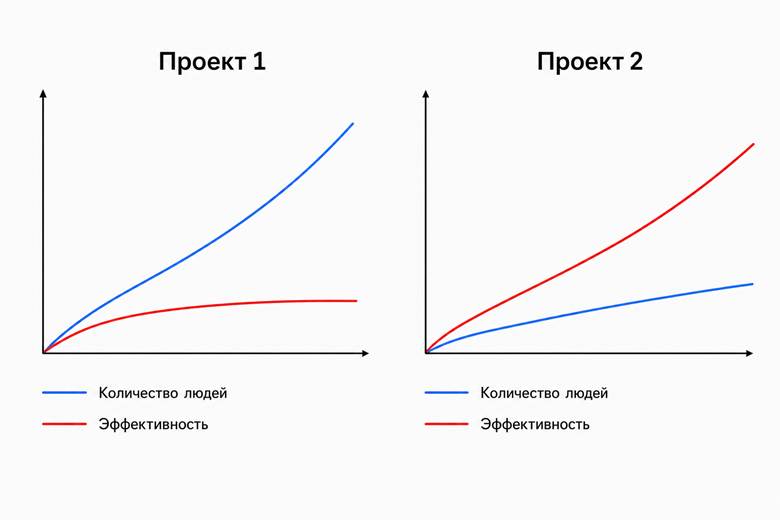
A study of two corporate projects shows that increasing headcount often leads to lower productivity and slower delivery times due to poor architectural design.

The author outlines a methodology for integrating neural agents into software development, focusing on automated testing, structured knowledge bases, and explicit invariant networks.

Engineering efficient ad-selection systems requires balancing storage methods and computational speed to meet strict 100-millisecond latency requirements in real-time bidding.

Building a functional AI application requires more than just code generation; it demands robust architecture, security, and cost-efficient infrastructure management.

Tutu optimizes its travel booking infrastructure by implementing a multi-cloud strategy across three independent sites to ensure 24/7 availability and mitigate technical risks.

A legal tech developer redesigned a RAG system by replacing pure LLM-based reasoning with a hybrid search, deterministic routing, and code-based validation to ensure accuracy and reproducibility.