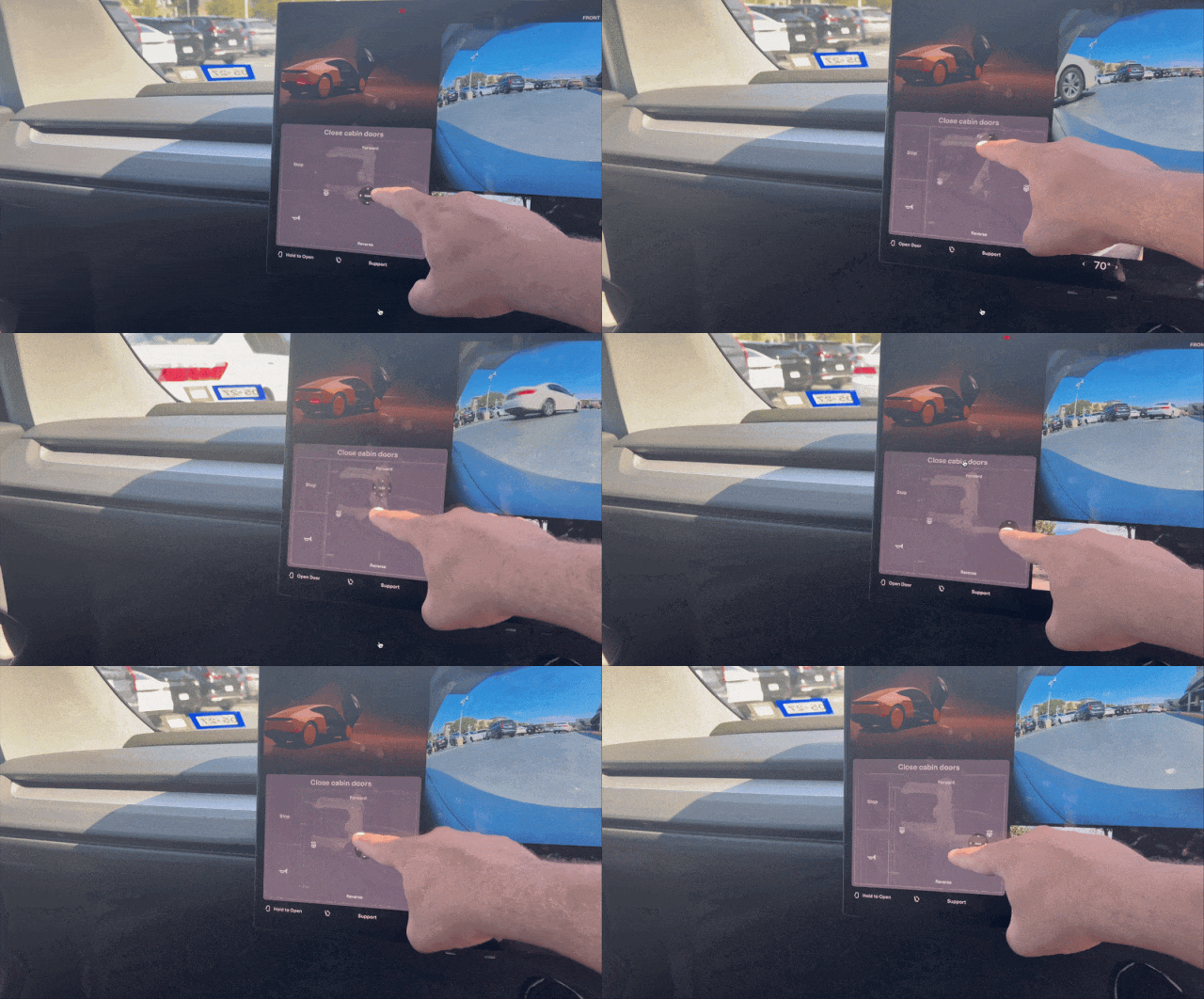
Passengers discovered a hidden virtual control interface on the central screen of the Tesla Cybercab. The interface features a joystick for forward and reverse movement, along with buttons for braking, honking, and door control. This software-based system is likely intended for employees, maintenance, and fleet operators to move vehicles during failures or accidents.
Real-world testing shows varying costs. In one instance, a trip to a bar in Austin cost $7.77 for a Cybercab, compared to $12.10 for a Model Y Robotaxi, representing a roughly 35% reduction. However, dynamic pricing during peak weekend demand has led to some price spikes and wait times approaching one hour.
A MotorTrend reporter recorded an average cost of $2.93 per mile across five trips totaling 11.5 miles, with a total spend of $33.72. The longest trip of 6.2 miles cost $11.44, or approximately $1.85 per mile. Tesla's software lead, Silvio Brugada, stated that dynamic pricing is currently used to balance supply and demand.
The NHTSA has launched an investigation into approximately 1,000 vehicles. The agency is examining Tesla's self-certification process, as the Cybercab lacks a steering wheel, brake pedal, accelerator, and traditional mirrors, while many federal safety standards are still based on human-driven vehicles.
User feedback indicates issues with lumbar support in the seats and noticeable bumps on poor road surfaces. Tesla has launched a passenger survey to gather data on desired features for future versions, including seat heating, ventilation, wireless charging, and improved audio systems.