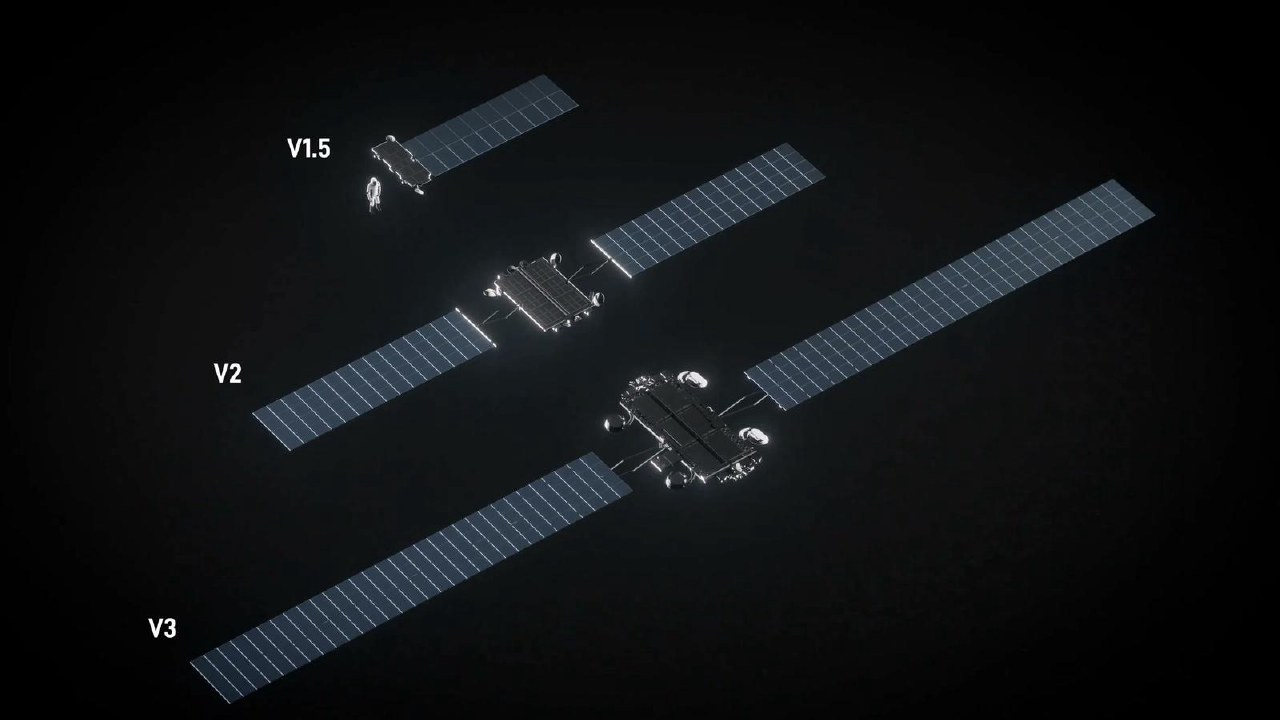
SpaceX is set to begin the deployment of its third-generation Starlink satellites this month. According to Elon Musk, the new V3 constellation aims to increase network capacity by more than 100 times compared to the current system, which currently consists of approximately 11 000 satellites.
The initial batch of 26 V3 satellites will be launched during the 14th test flight of the Starship rocket. Each new unit is designed to provide about 1 Tbps of throughput, meaning a single mission could potentially add 26 Tbps to the total network capacity. This represents a tenfold increase in capacity per mission compared to the V2 mini generation.
Once deployed, the satellites will activate their solar arrays and antennas, establishing links with Earth and the existing constellation via radio frequency and laser communication. They will then use onboard thrusters to reach their target orbits. Service for customers is expected to begin within a few weeks following the launch.
Three of the new satellites feature specialized camera kits to monitor the Starship heat shield. These devices will transmit imagery to ground operators to assist in testing and analyzing the thermal protection system's readiness for future landings on the launch pad.