

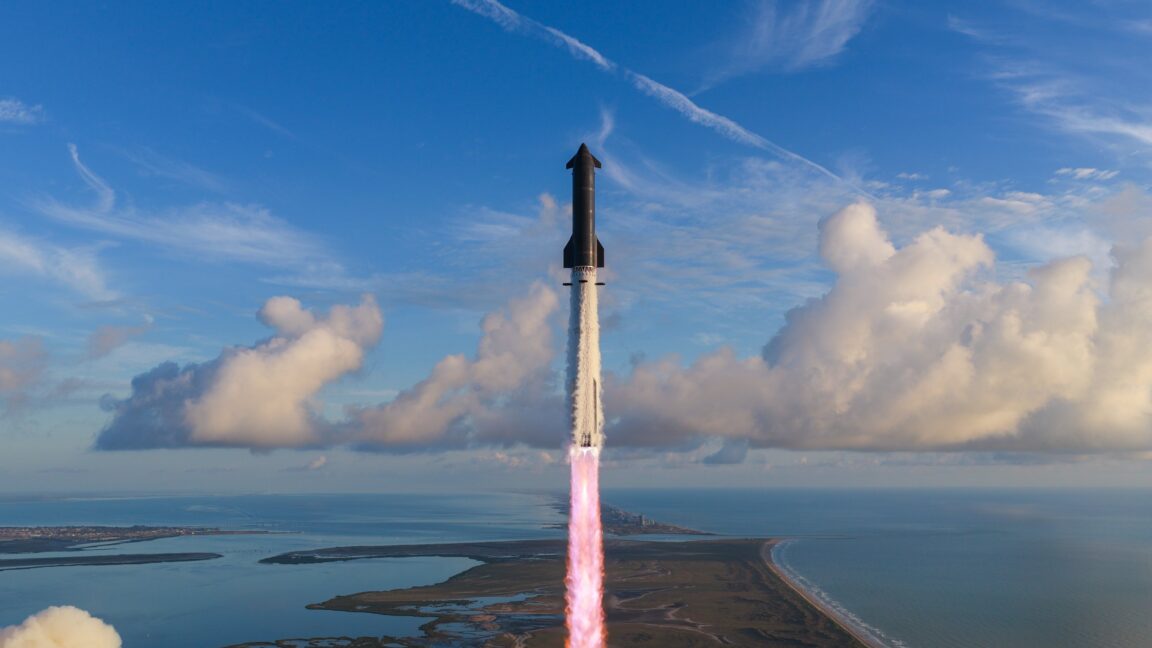
SpaceX successfully completed the first orbital flight of its Starship rocket, launching from Starbase, Texas, at 8:49 am EDT. The 124-meter-tall vehicle reached a stable orbit at an altitude of approximately 276 kilometers after a 19-second insertion burn. During the ascent, one of the six Raptor engines on the upper stage and two of the 33 engines on the Super Heavy booster experienced shutdowns.
The mission carried 26 next-generation Starlink V3 broadband satellites. Each satellite weighs about 2 metric tons and offers 1 Tbps of capacity, which is 10 times more than previous versions. These satellites are too large for the Falcon 9 rocket and require Starship for deployment. SpaceX confirmed contact with all 26 satellites after they were released into a low-inclination orbit.
Following the insertion burn, flight controllers opted to shorten the mission duration due to the engine malfunctions during ascent. The vehicle performed a de-orbit burn and splashed down in the Pacific Ocean north of Hawaii at 11:57 am EDT, roughly three hours after liftoff. The rocket broke apart upon impact with the water, as expected by the company.
SpaceX is currently phasing out Falcon 9 launches for Starlink in favor of Starship. The company is preparing for future flights, with potential launches from Starbase as early as October and plans to activate a new launch pad at the Kennedy Space Center in Florida before the end of the year. Engineers continue to refine the Raptor 3 engine design following recurring performance issues.



