

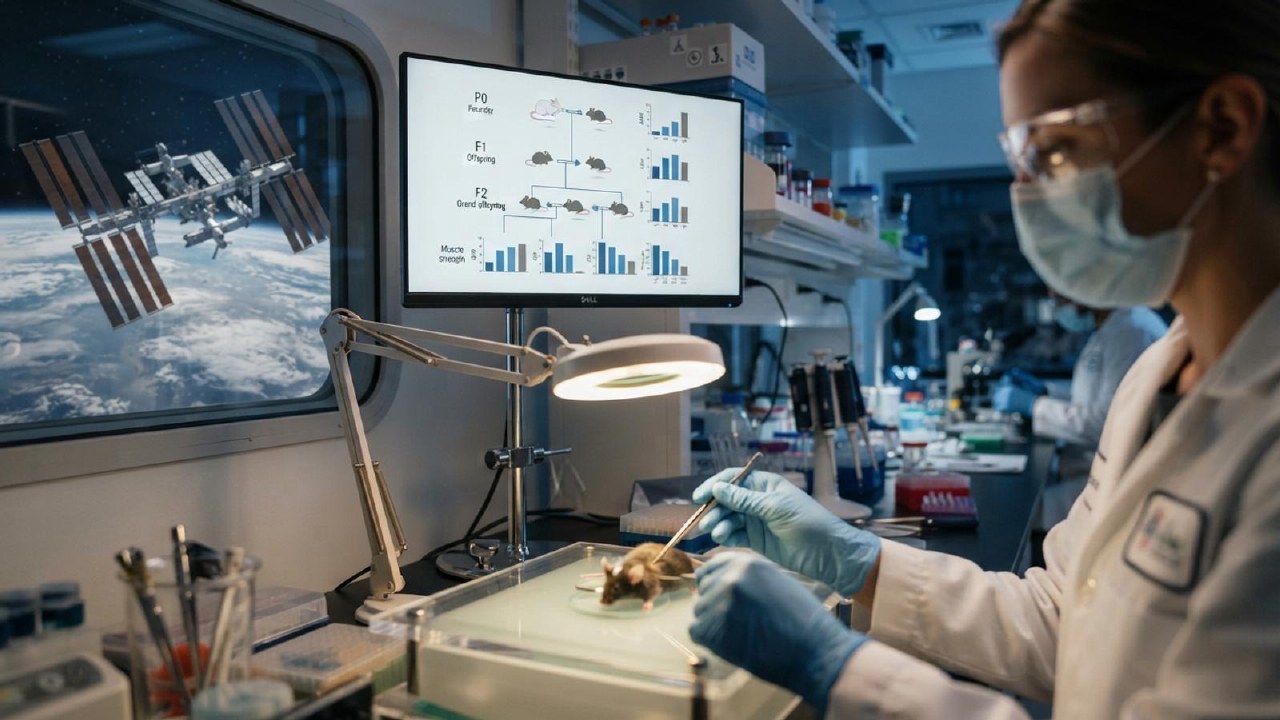
Researchers from the University of Kansas Medical Center and NASA Ames Research Center studied the reproductive impact of spaceflight on mice. The subjects spent 42 days on the International Space Station after launching on the SpaceX CRS-29 mission in November 2023.
The mice that returned from orbit successfully gave birth, though their litters were slightly smaller than those of the control group. Significant changes emerged in the second generation: the daughters exhibited a 15% reduction in muscle strength and increased stress responses.
The reproductive health of the descendants was notably affected. The daughters produced fewer and smaller litters, and both the daughters and granddaughters showed reduced levels of anti-Mullerian hormone, which indicates a lower ovarian reserve.
The study suggests that microgravity might trigger accelerated cellular aging or mitochondrial dysfunction, though the exact mechanism remains unconfirmed. Scientists emphasize that the sample size was limited to 20 mice and the ISS offers protection from deep-space radiation.
Experts view these findings as a preliminary warning rather than a definitive conclusion for human space travel. The researchers advocate for closer monitoring of reproductive markers in future long-duration space missions.



