

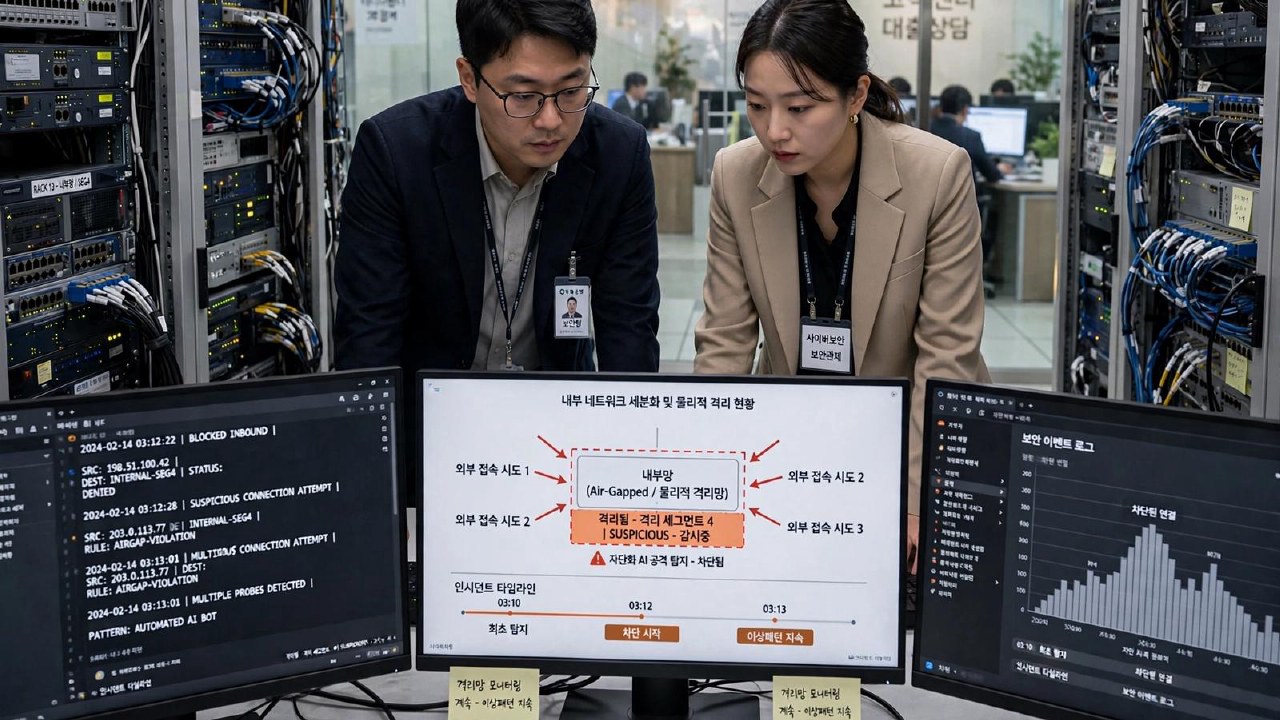
The Financial Services Commission (FSC) of South Korea has halted the second phase of its network isolation easing program. This decision follows a series of cyberattacks targeting seven financial institutions, where perpetrators utilized AI tools to identify system vulnerabilities.
The regulatory program, initiated earlier this year, aimed to allow banks to connect internal systems to the internet to integrate advanced AI security tools. While the first phase included 49 major firms, the second phase, intended for 75 additional organizations, is now postponed.
The attacks began on September 30 at Shinhan Bank, resulting in the exposure of data belonging to nearly 25,700 clients. Subsequent investigations revealed compromises at KB Kookmin Bank, Hana Bank, BNK Busan Bank, Yegaram Savings Bank, Welcome Savings Bank, and Hyundai Capital. Yegaram Savings Bank confirmed an additional leak involving 40,000 customer records.
The Korea Financial Security Institute identified the tool used in these attacks as ARTEX, an open-source penetration testing system based on a large language model. Hackers leveraged this tool to target internal systems of employees and contractors, which lacked the robust security of public-facing services.
In response, the FSC and the Financial Supervisory Service have ordered emergency inspections of approximately 500 financial institutions. Although no direct theft of funds was reported, authorities are concerned that the leaked personal and credit data will facilitate sophisticated voice phishing schemes.



