

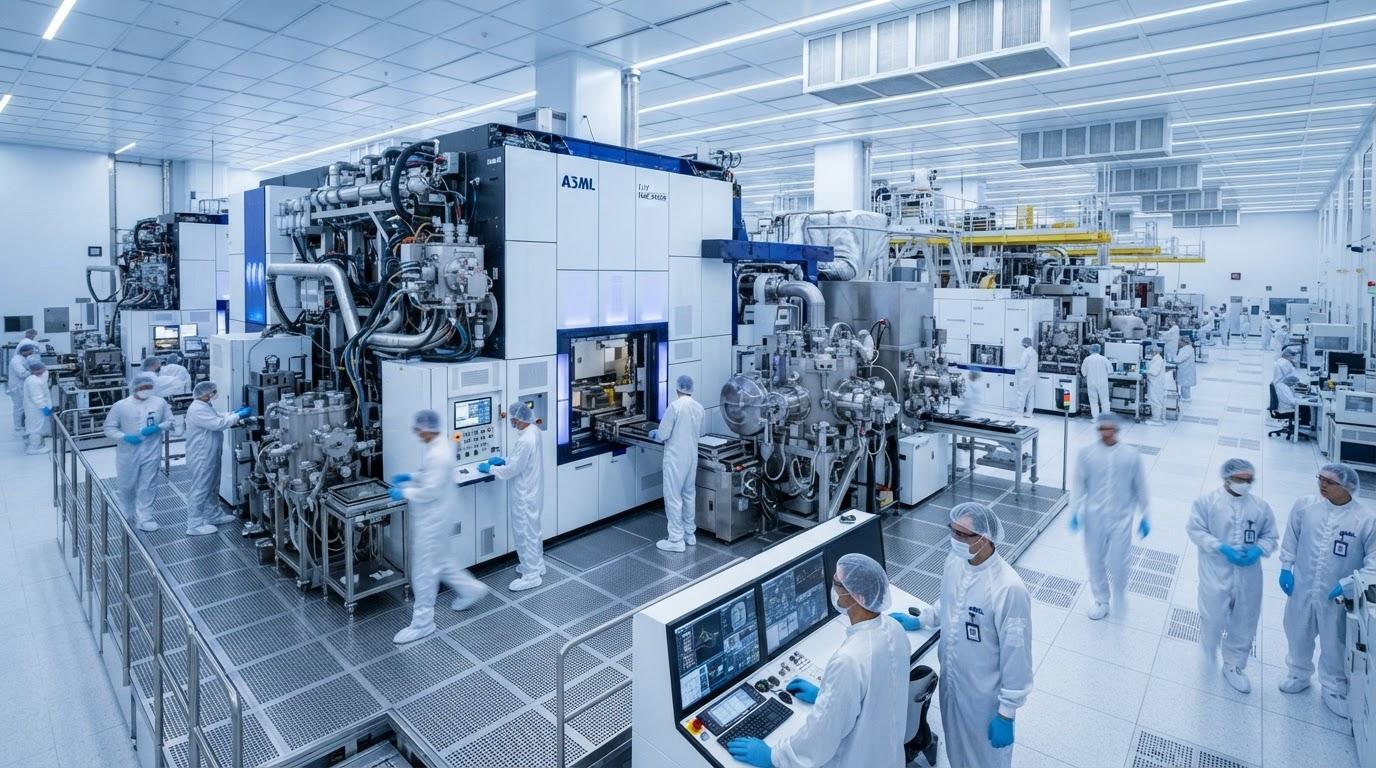
The rapid expansion of artificial intelligence has triggered a significant shortage in semiconductor manufacturing equipment. According to TrendForce and ETNews, lead times for critical components have surged, with some parts now requiring up to 40 months for delivery. This bottleneck affects major industry players, including ASML, Applied Materials, Lam Research, Tokyo Electron, and KLA.
By July 2026, delivery times for equipment from these manufacturers increased by 1.5 to 2 times, extending from six months to as long as 12 months in certain cases. Components for thin-film deposition systems now take up to 10 months to arrive, compared to the previous four-month window. Meanwhile, specialized parts for laser systems from some Japanese suppliers face record-breaking 40-month wait times.
The supply chain crisis extends to chip packaging equipment, where lead times have grown from four to six months. This delay poses risks to the expansion projects of Samsung Electronics and SK Hynix, which aim to increase DRAM and memory production. Despite customer willingness to pay premiums for faster fulfillment, suppliers lack the spare capacity to accelerate production.
Many suppliers failed to anticipate the AI-driven demand surge and did not scale their operations in advance. Current expansion efforts are cautious, as launching new production lines requires significant capital and takes 12 to 18 months, raising concerns about potential future overcapacity. The industry now faces constraints across various parts, including valves, ceramic components, and gas systems.


