

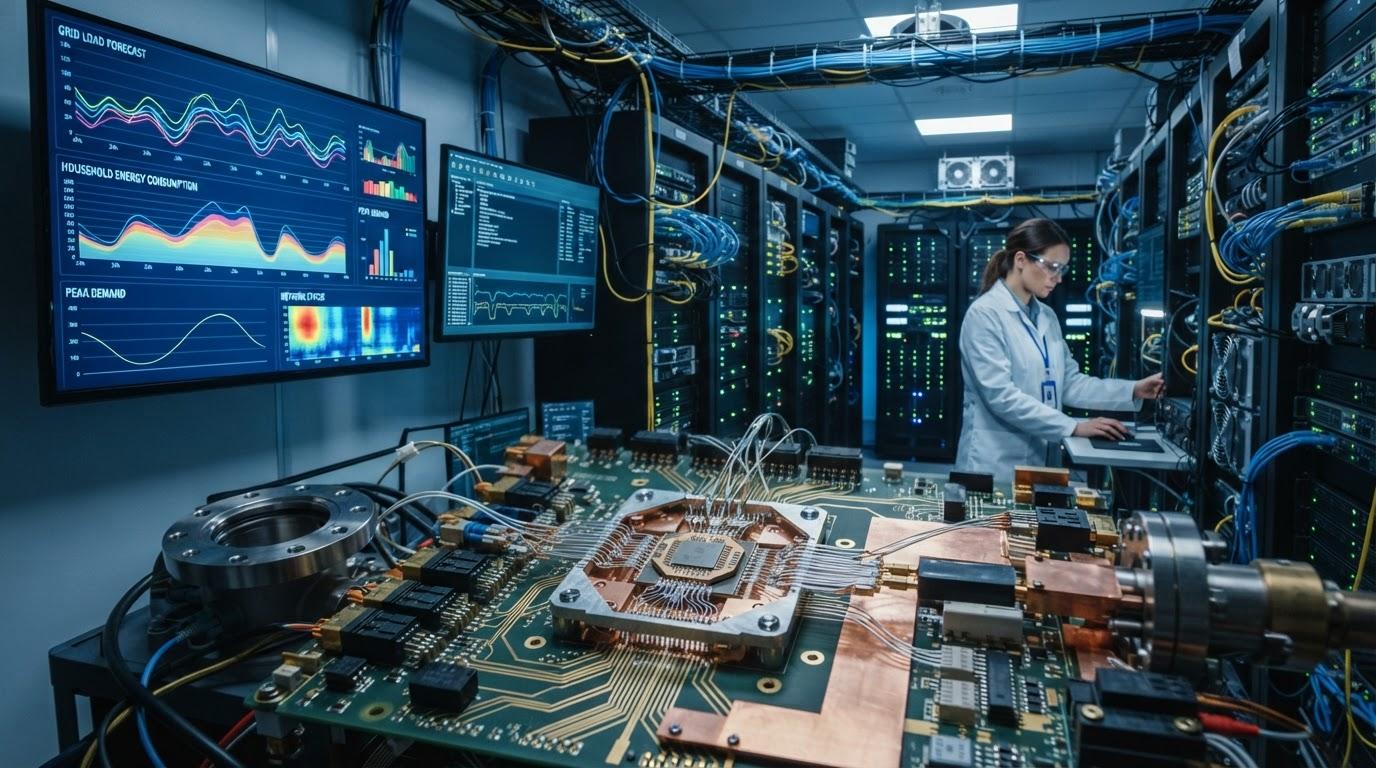
Silicon Quantum Computing and Schneider Electric have tested a quantum processor to forecast household energy consumption. The project, which also involved the University of New South Wales, utilized the Watermelon quantum chip. This hybrid system improved prediction accuracy by an average of 20% compared to classical models, with peak performance gains reaching 41%.
The Watermelon processor, introduced by SQC in 2025, operates alongside traditional computing hardware rather than replacing it. It generates quantum features that are integrated with standard data to identify complex patterns. The technology is currently accessible via the cloud and can be deployed within data centers for various sectors, including banking and telecommunications.
Following the initial results, the partnership secured AUD 3.6 million, approximately $2.5 million, from the Australian government under the Critical Technologies Challenge Program. This funding supports the second phase of the project, which involves testing the system on data from hundreds of households and integrating it into Schneider Electric's existing infrastructure.
The integration aims to address the growing complexity of home energy systems, which now include solar panels, batteries, and electric vehicles. By improving forecast accuracy, the companies intend to optimize energy production, storage, and distribution. The upcoming phase will determine if the performance advantages persist when scaled for industrial operations.

