

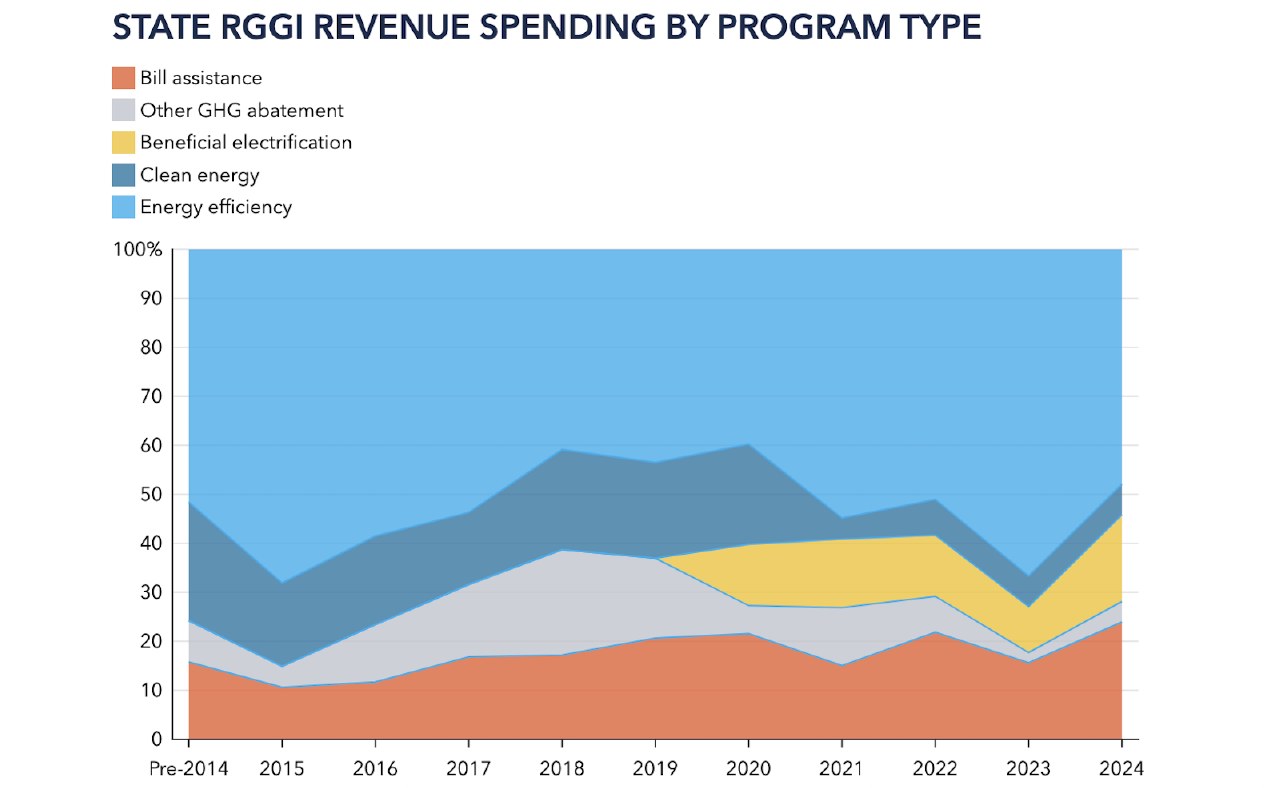
The Regional Greenhouse Gas Initiative (RGGI) is currently being used by states to offset rising electricity costs for households. The program sets a declining cap on carbon emissions from power plants, requiring polluters to purchase permits. Proceeds from these permits are returned to participating states to fund energy and environmental initiatives.
Between 2018 and 2020, the initiative generated 7,874 jobs in energy infrastructure and efficiency, contributing an estimated $223 million in annual economic activity. Since its inception in 2009, the program has saved households and businesses a total of $23 billion. In 2024 alone, RGGI funding is expected to reduce regional electricity bills by $363 million.
States are increasingly directing funds toward direct bill credits and rebates. In 2024, 23 percent of investments were allocated to bill credits, up from 10–19 percent in previous years. For environmental justice communities, this allocation reached 39 percent. New Jersey and Virginia have implemented specific measures to target these credits toward high-usage months and vulnerable customers.
The program is undergoing updates to improve performance, including a proposed model rule that sets an emissions reduction trajectory through 2037. This rule also expands the Cost Containment Reserve and the Emissions Containment Reserve to manage price volatility. States are expected to adopt these changes within the year to maintain the program's effectiveness for electricity consumers.



