

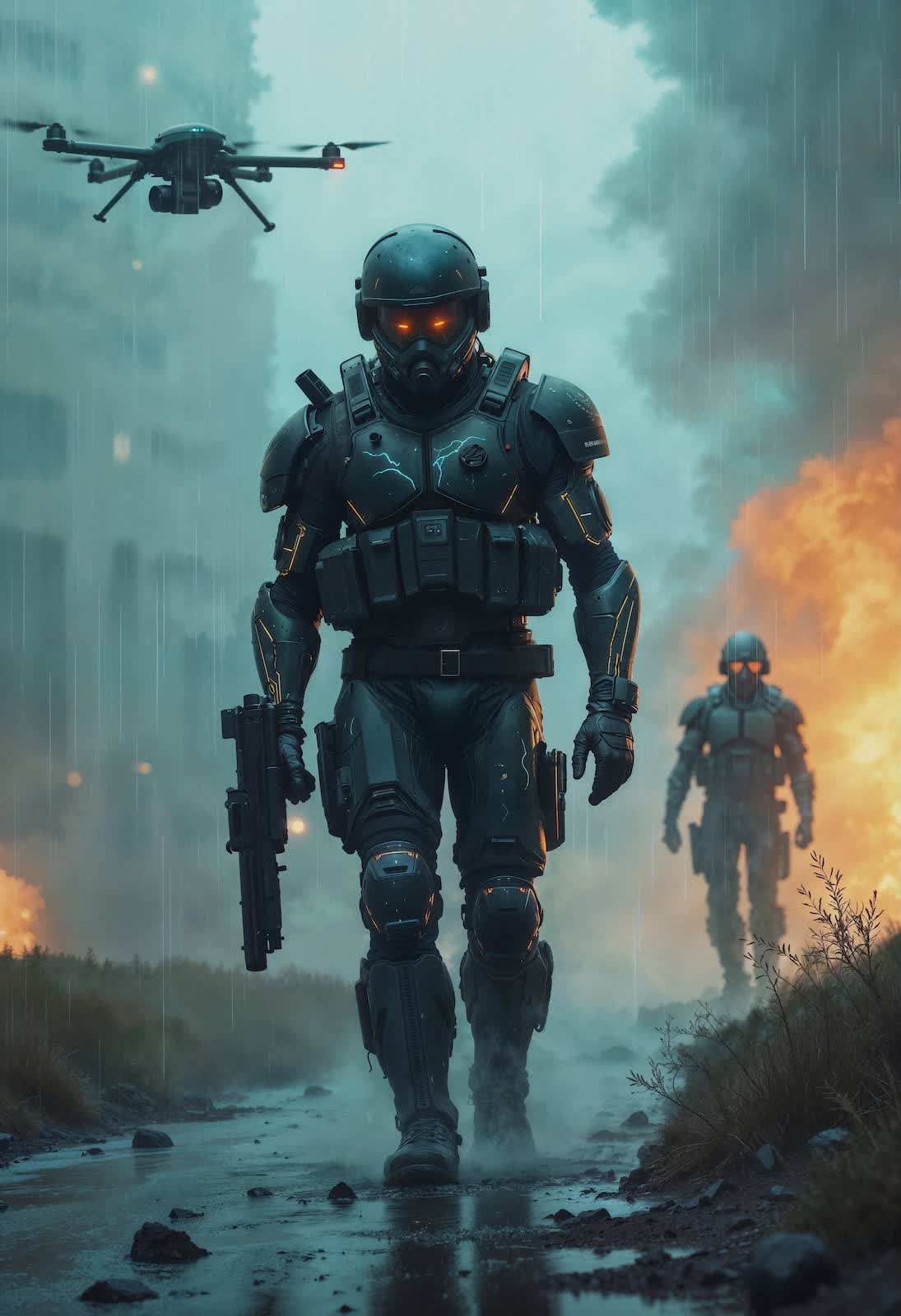
Retired four-star general and former CIA director David Petraeus predicts that AI could begin commanding battlefield weapon systems by around 2030. He envisions a shift where autonomous systems, or 'agentic AI,' function as staff officers capable of managing complex operations without human intervention.
The proposed model involves a unified network connecting autonomous sensors and weapon platforms. These systems would collect intelligence and coordinate actions across multiple machine clusters, potentially operating at platoon or battalion scales. Petraeus also highlighted 'recursive learning' as a key driver for future military technological advancements.
Regarding immediate applications, Petraeus expects the use of autonomous drone systems in Ukraine to expand by the end of 2026. This shift is projected to reduce the demand for human pilots, allowing militaries to deploy more platforms despite personnel limitations.
Despite these predictions, the US military maintains a 'human-in-the-loop' policy. Admiral Brad Cooper of US Central Command stated that while AI is used to process vast amounts of data, the final authority to engage targets remains with human operators.
Petraeus suggests that transitioning to autonomous warfare requires significant organizational reform. He noted that the UK might lead in this area due to its centralized command structure and higher budget allocation for unmanned systems compared to the United States.



