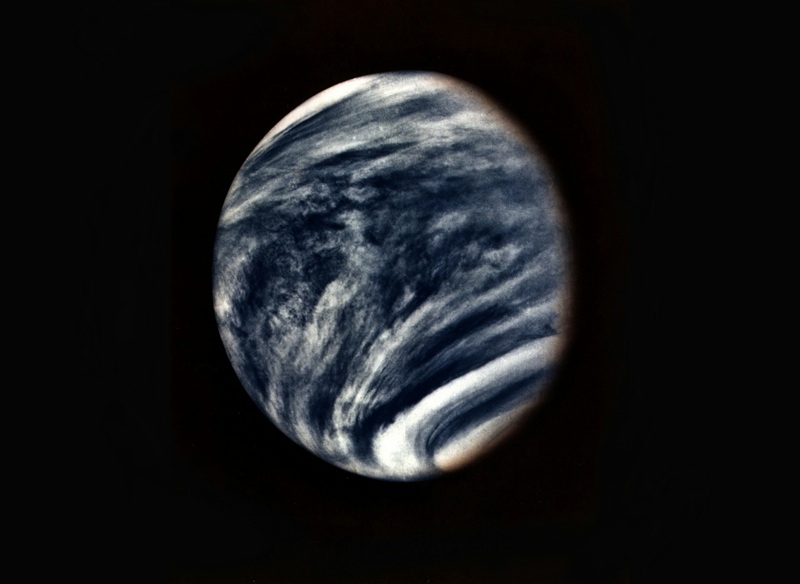
Researchers from Tohoku University in Sendai, Japan, led by planetary scientist Hiroki Karyu, have identified the origin of the haze in Venus's atmosphere. Using a microphysical model, the team determined that the haze consists of cosmic dust particles resulting from meteorites burning up in the atmosphere.
These dust particles interact with sulfuric acid to form the haze. The study, published in Nature Astronomy, confirms that this continuous influx of cosmic dust is sufficient to maintain the lower haze layer observed by probes in the 1970s. The particles act as condensation nuclei, facilitating cloud formation.
The research refutes previous theories suggesting that volcanic ash or surface dust were the sources of the haze. The scientists demonstrated that even with higher volumes of volcanic or surface dust, the chemical interaction with sulfur would not produce the observed haze.
The study also identified iron sulfate as the substance responsible for absorbing ultraviolet radiation in the atmosphere. The researchers found that at altitudes between 40 and 50 km, high energy creates a barrier preventing sulfuric acid from sticking to particles, which then cool in upper layers.