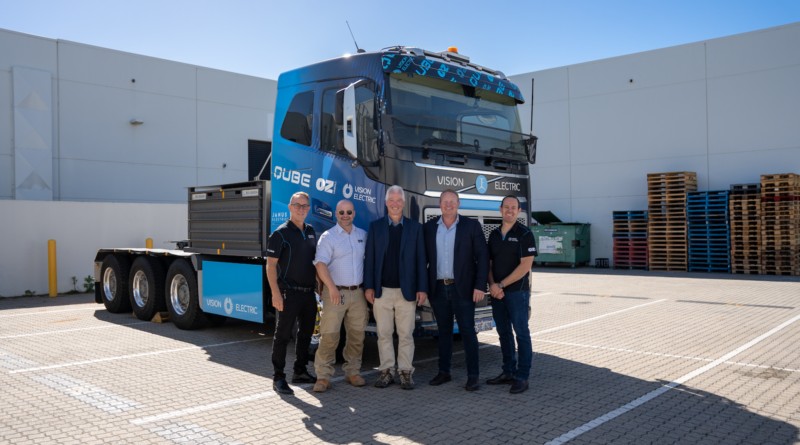
Janus Electric, an Australian company specializing in electric truck conversions and battery swapping, reports a battery overhead of approximately 30% for its fleet operations. This overhead refers to the additional battery capacity required to maintain continuous freight movement across heavy truck corridors.
The system utilizes specific operational strategies to optimize battery usage. Through chain staging, trucks are dispatched at intervals to ensure constant movement between stations. Route stuffing allows multiple trucks to share charging infrastructure, where a battery pack charges while a truck is en route, minimizing the total number of batteries needed.
Battery swapping operations can be completed in 4 minutes per vehicle. When multiple trucks arrive simultaneously, they are serviced sequentially at 4-minute intervals to prevent waiting times. This staggered approach helps manage peak power demand and ensures efficient throughput for fleet logistics.
System flexibility allows for adjustments based on cargo requirements. By placing stations at half-distance intervals, operators can reduce the size of mobile battery packs, which increases the load-carrying capacity of the trucks. These methods help minimize capital costs and grid power demands for electric freight systems.