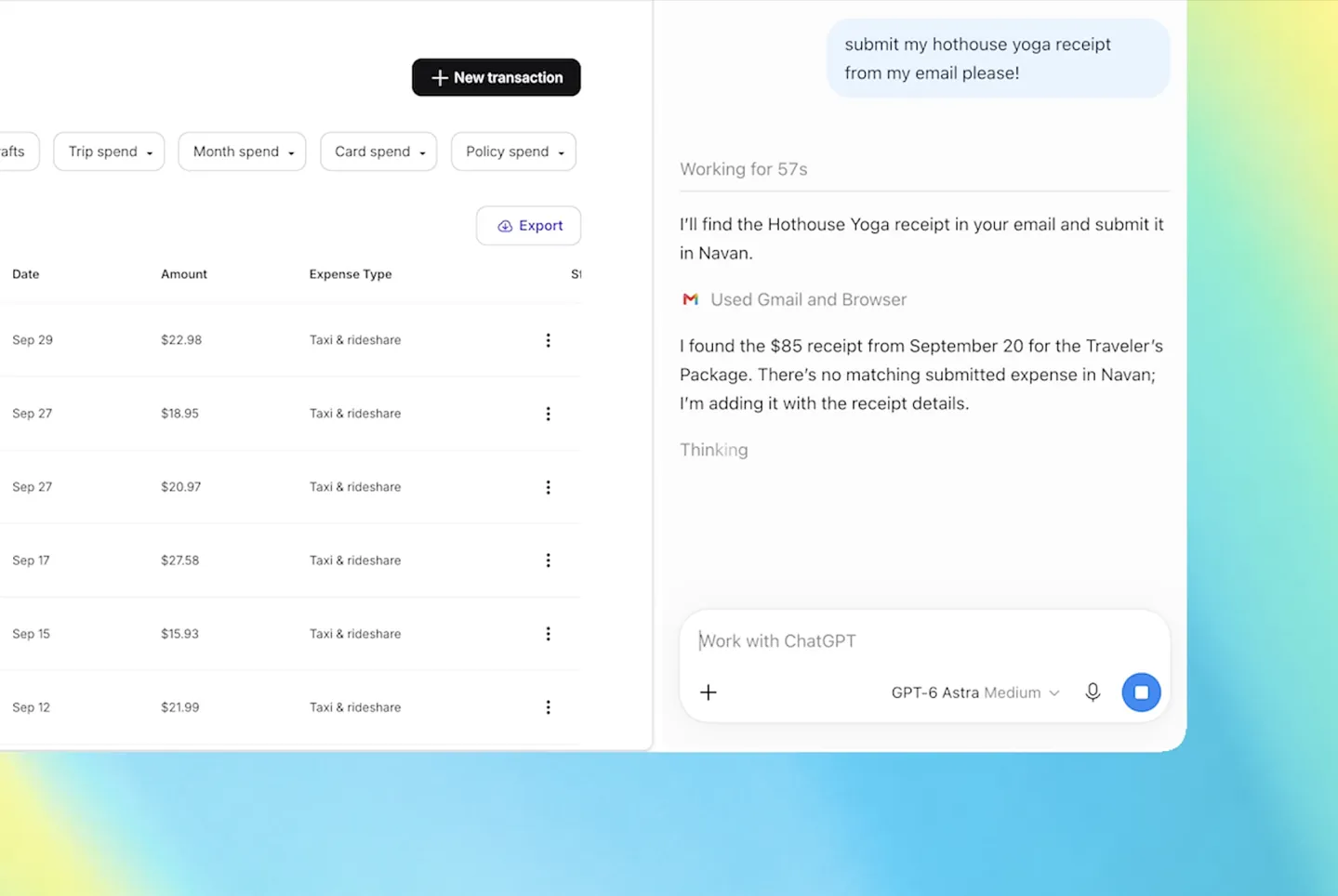
OpenAI is transforming ChatGPT into a central hub for software discovery and usage, effectively challenging the traditional app store model. The platform, which reports 1.2 billion weekly users, will now suggest relevant apps directly within conversations to help users complete tasks.
The updated plugin architecture allows developers to build interactive panels, enabling users to operate third-party tools without leaving the ChatGPT interface. Currently, 16 launch partners are participating, including Notion, Vercel, and Cognition’s Devin.
OpenAI has introduced an enterprise marketplace featuring over 30 partners, such as Adobe, Figma, Salesforce, and HubSpot. Eligible enterprise customers can apply their existing OpenAI service commitments toward the cost of these approved partner applications.
The company also launched autonomous AI agents called Dots. These agents operate in their own cloud infrastructure, can browse the web, and interact with an ecosystem of over 4,000 connected applications to perform tasks on behalf of the user.
Developers now have access to an improved submission and review process for plugins, allowing them to track status, request human reviews, and update tools without restarting the entire submission cycle.
While OpenAI is building the infrastructure for app distribution and identity management, the company has not yet announced a revenue-sharing model or a billing system similar to those found in traditional mobile app stores.