

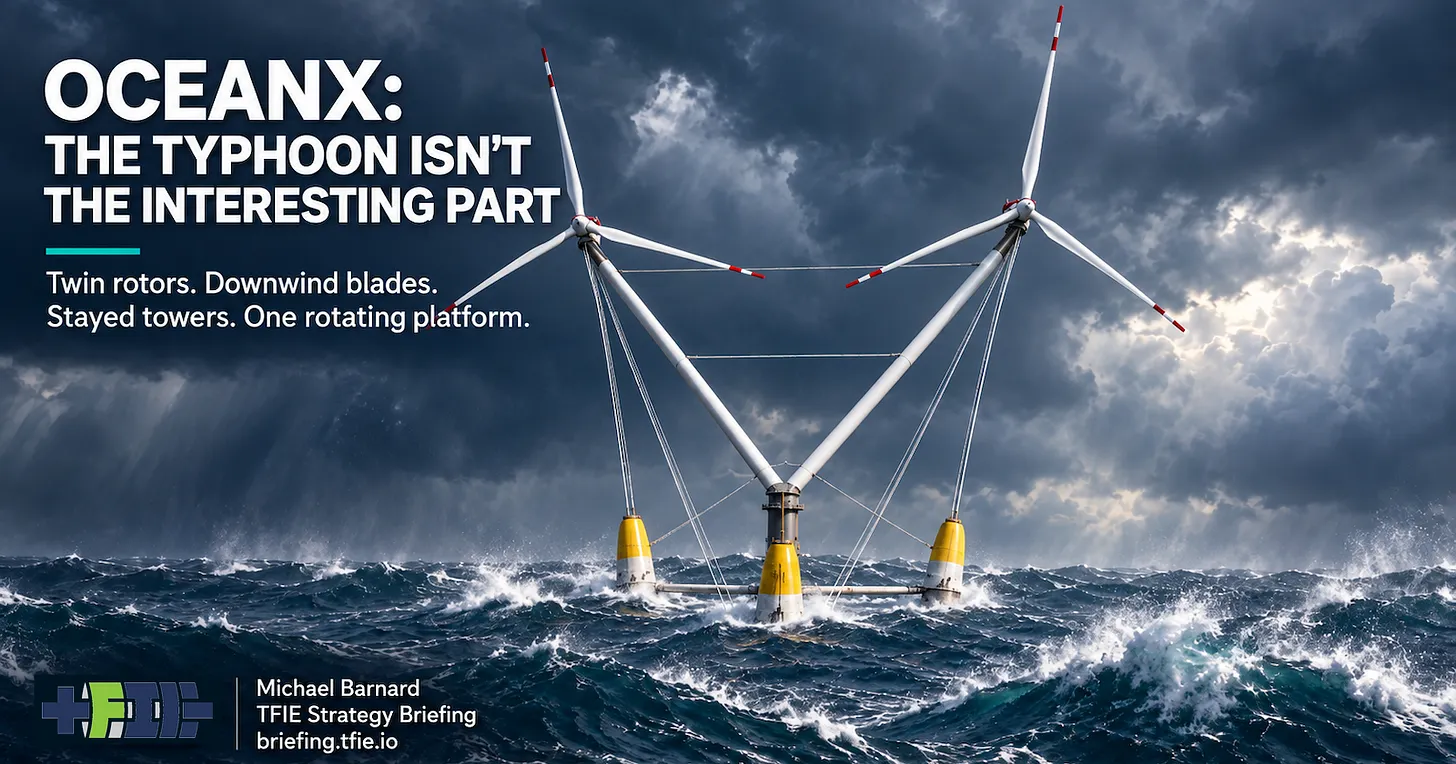
The OceanX floating wind platform features two turbines on a single structure with rotors positioned downwind. During Super Typhoon Yagi, the system was tested under extreme conditions. Mingyang reported wind speeds at the nacelle exceeding 41.5 meters per second, with significant wave heights of 6.5 meters and a maximum wave height of 9.8 meters.
Data collected during the storm showed that the platform's inclination varied between zero and three degrees. The structure's response aligned with pre-storm simulations, showing no abnormal resonance or lasting changes in attitude. The design utilizes slender inclined supports held by pretensioned stays, which aim to reduce aerodynamic wake interference compared to traditional towers.
The platform is designed to weather-vane relative to its moorings, keeping the rotors aligned with the wind direction. While this architecture addresses historical aerodynamic fatigue issues, the use of twin rotors remains under evaluation. This configuration requires two nacelles, two drivetrains, and six blades, which increases the number of components compared to a single-rotor system.
The long-term economic viability of the OceanX design remains unproven. Key factors for future assessment include structural mass, 25-year fatigue data, maintenance procedures for underwater interfaces, and the overall cost-benefit ratio compared to conventional floating turbines.



